
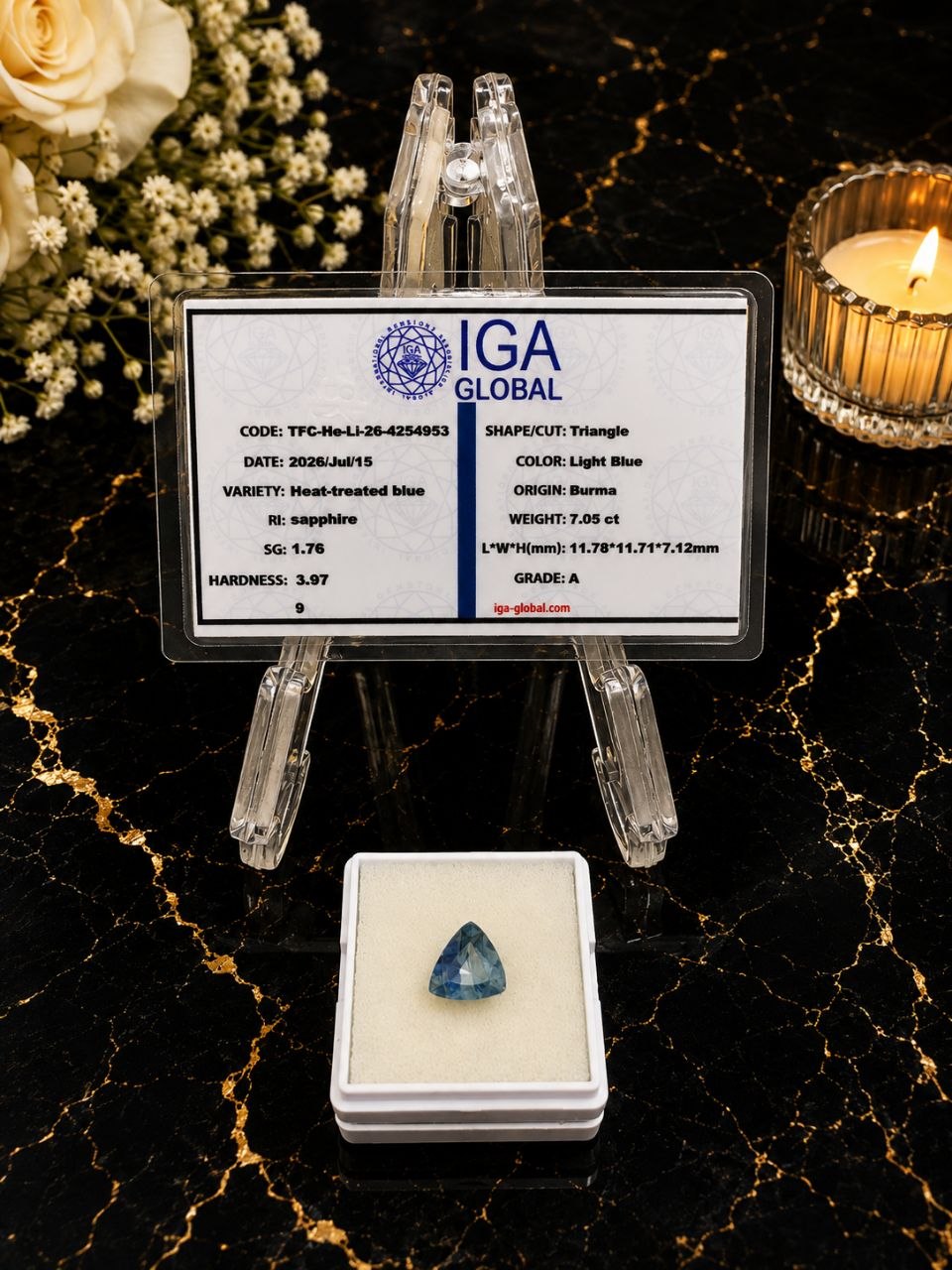
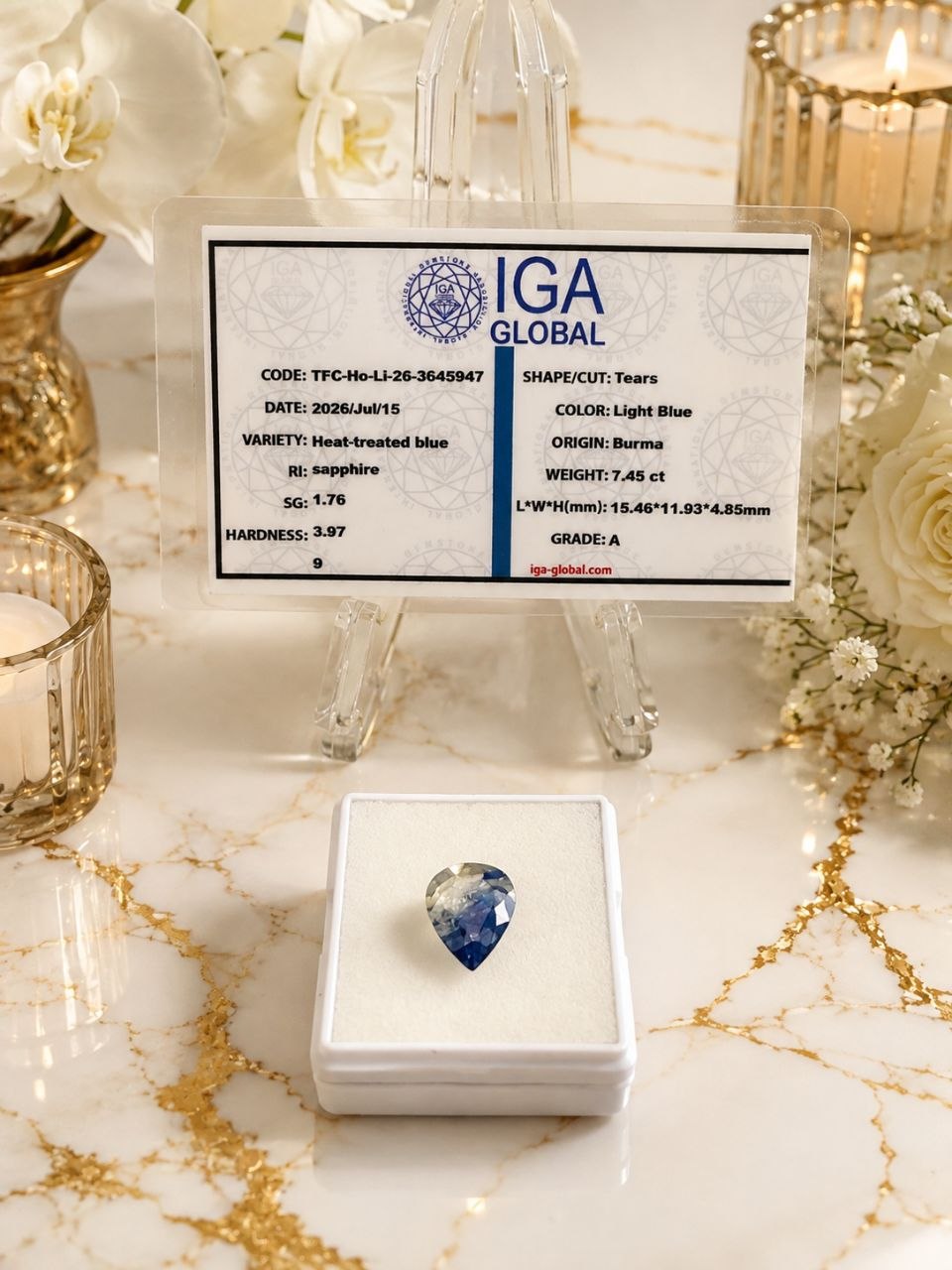
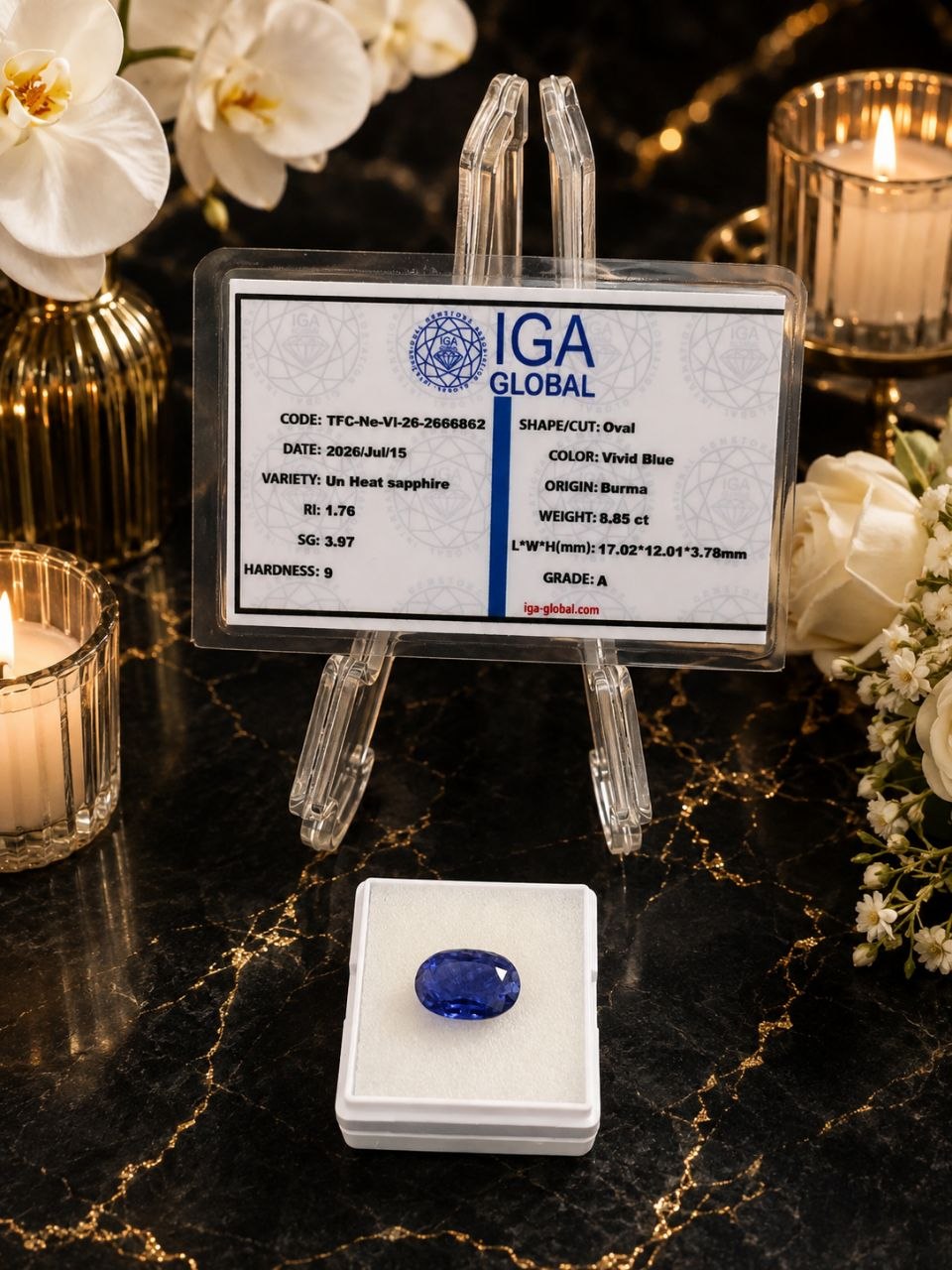
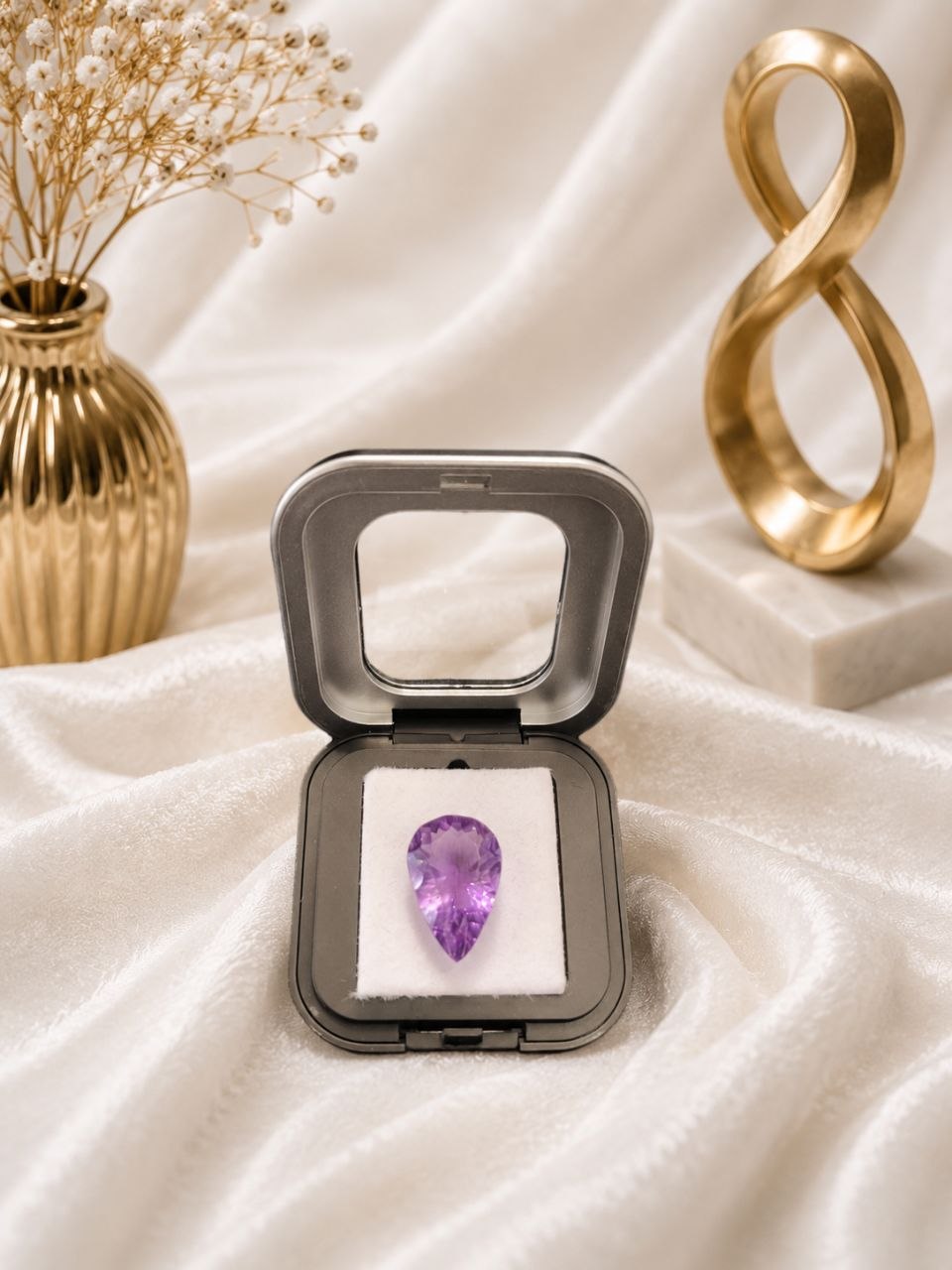
Description
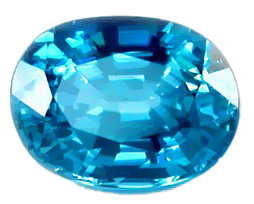
Blue Sapphire
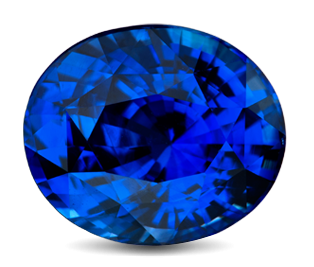
The name Sapphire is derived from the Greek word “Sappheiros,” meaning “blue.” This mineral is an aluminum oxide that occurs in metamorphic and igneous rocks, such as nepheline syenites, in the form of trigonal crystals.
With its high hardness and striking color, Sapphire has been regarded throughout history as one of the most popular and valuable gemstones. It is a member of the Corundum family and is commonly known as Blue Sapphire. In general, all Corundum varieties that are not red are classified as Sapphire. In this section, however, we focus specifically on Blue Sapphire.
Sapphire is considered a precious gemstone. Therefore, four major factors are taken into consideration when evaluating its value: Color, Clarity, Cut, and Carat Weight.
Color
Due to the presence of iron and titanium, Sapphire naturally occurs in colors ranging from deep blue to violetish blue.
Among the various colors of Sapphire, Kashmir Sapphires, with their distinctive violetish-blue color, are considered among the most valuable. In general, however, color is the most important factor in evaluating colored gemstones and Sapphires.
Clarity
Gemstone clarity is directly related to the presence of various internal and external inclusions and plays an important role in gemstone valuation. Inclusions can affect the transparency, color, and durability of gemstones.
At the same time, inclusions are one of the most useful features for distinguishing natural gemstones from synthetic materials. Therefore, understanding different types of inclusions can lead to more accurate gemstone identification.
Some common inclusions found in Sapphire include:
1. Crystals
Minerals such as pyrite, manganite, calcite, garnet, boehmite, apatite, spinel, and zircon may occur as crystal inclusions within the stone.
2. Needles
Some inclusions appear as thin, elongated needles or rods composed of rutile silk. These inclusions can create a silky appearance and may contribute to certain optical phenomena.
3. Color Zoning
Different areas of the gemstone may exhibit variations in color intensity, with some areas appearing darker and others lighter.
4. Color Banding
Color banding is one of the common internal features found in Sapphires and appears as distinct bands or stripes of different colors within the stone.
5. Parting
Parting is a type of structural separation or fracture that may develop within the stone in a step-like pattern.
6. Liquid Inclusions
Liquid inclusions may occur within fractures and can appear as fingerprint-like patterns, commonly known as Liquid Fingerprints.
Treatments and Enhancements
Due to the high value of Sapphire, various treatments may be applied to improve its appearance and quality. These processes are primarily intended to enhance the stone’s color, clarity, and overall appearance. Many Sapphire treatments are based on heat treatment.
1. Heat Treatment
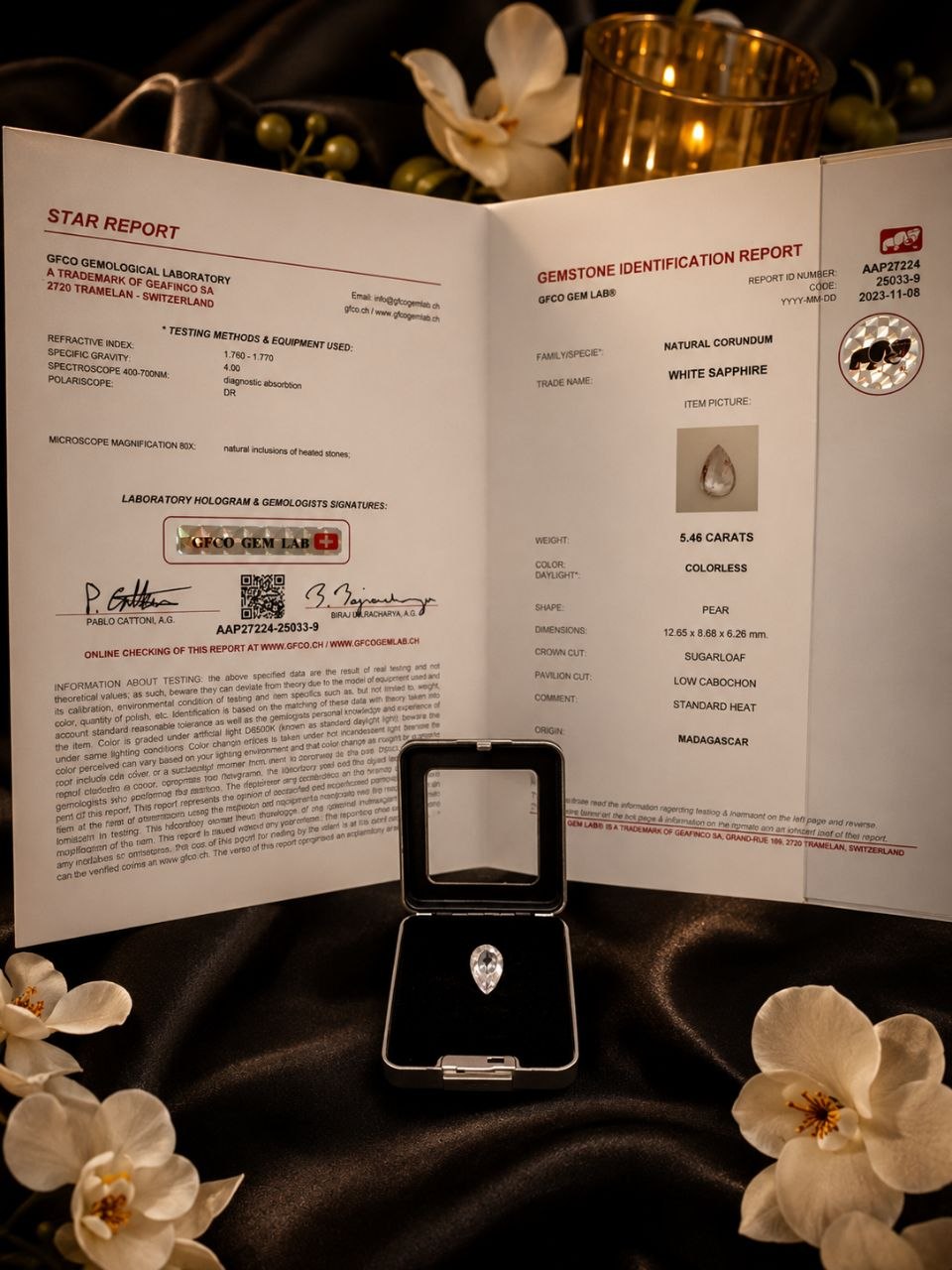
In this process, Sapphires are heated so that certain internal crystals become less visible or disappear within the stone.
2. Reduction of Color Zoning
Dark Sapphires exhibiting Color Zoning may be heat-treated to reduce the visibility and intensity of the zoning.
3. Development of Rutile Silk
In this process, titanium is placed in proximity to the Sapphire and the stone is heated to temperatures ranging from approximately 1,300°C to 1,900°C. It is then slowly cooled over a period of approximately 114 days. The resulting Sapphires may exhibit the Star phenomenon.
4. Removal of Rutile Silk
In some cases, the presence of rutile silk can make a gemstone appear cloudy and reduce its transparency. Heat treatment may therefore be used to dissolve and reduce the visibility of rutile silk inclusions within the mineral.
5. Surface Diffusion
In this process, the gemstone is heated to a temperature at which its surface partially melts, and titanium is then introduced in contact with the stone. The titanium diffuses into the surface, resulting in a deeper blue color.
If a sufficient amount of titanium is introduced, the Star phenomenon may also appear.
6. Fracture Filling
In this treatment, existing cracks and fractures within the gemstone are filled with glass or other filling materials.
7. Irradiation
In this treatment, Sapphires are exposed to radiation to alter or enhance their color. However, the resulting color may not be stable.
Phenomena
The Chatoyancy phenomenon, commonly known as Cat’s-Eye, is caused by the reflection of fibrous or needle-like inclusions that are oriented in the same direction within the gemstone.
To properly display this phenomenon, the gemstone generally needs to be cut as a Cabochon.
The Asterism phenomenon occurs when a gemstone contains fine, needle-like or elongated rod-shaped inclusions of rutile silk. When these inclusions intersect at angles of approximately 60° to 120°, their reflection can produce the Asterism phenomenon, appearing as a star with approximately 6 to 12 sharp rays.
Sources
Sapphire is more abundant in nature than Ruby because the elements responsible for its coloration are more widely distributed. This beautiful gemstone is found in countries including India, Myanmar (Burma), Thailand, Sri Lanka, Australia, Tanzania, Madagascar, and North America.
| Source | Color | Inclusions |
| India (Kashmir) | Violetish blue | Contains rutile silk |
| Sri Lanka (Ceylon) | Slightly light violetish blue | Color zoning, fingerprint inclusions, zircon |
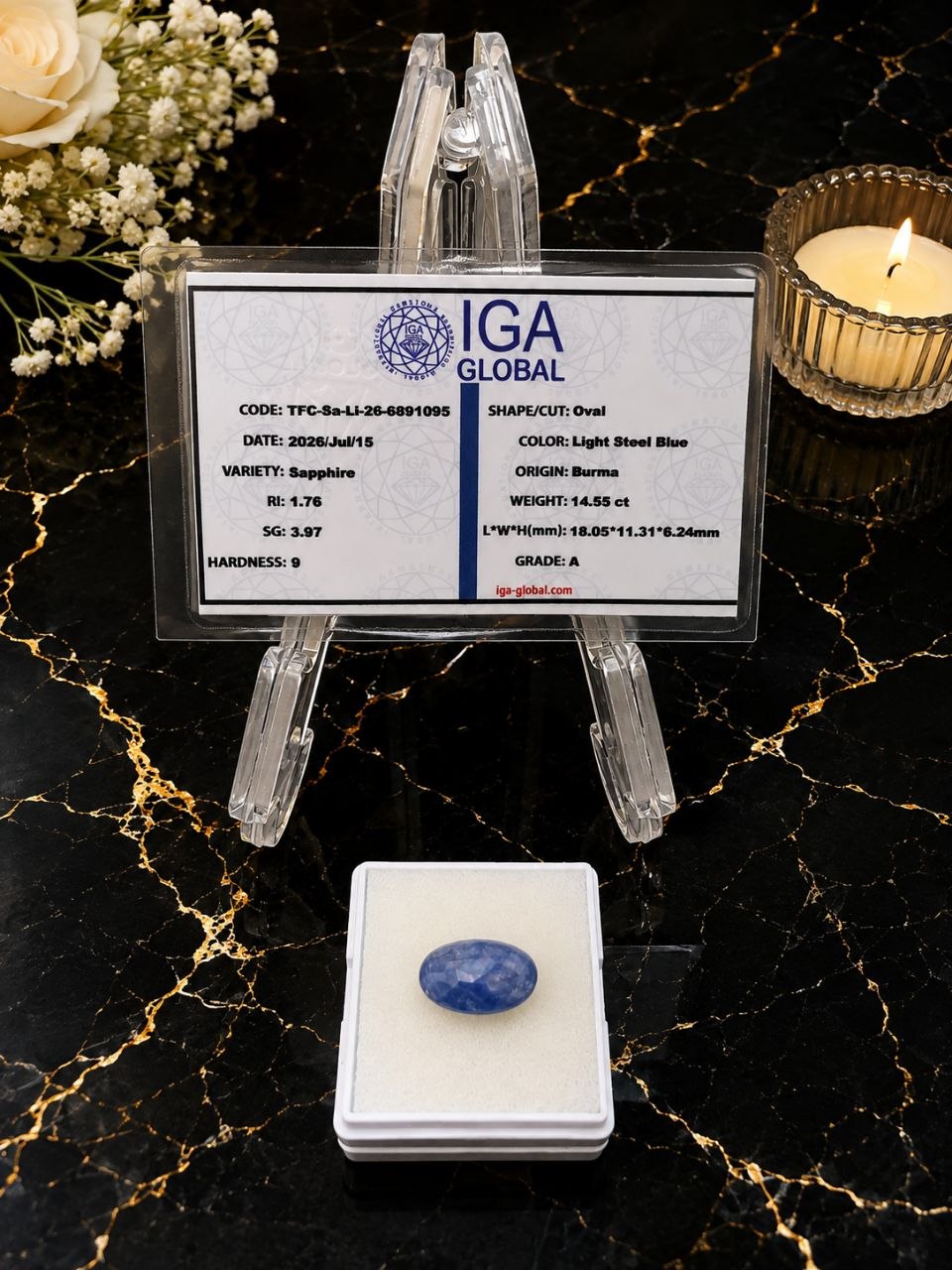
| Myanmar (Burma) | Deep violetish blue | Crystals, twinning, fingerprint inclusions |
| Thailand | Deep blue, sometimes inky blue | Crystals, feathers |
| Cambodia | Medium to dark blue | Crystals |
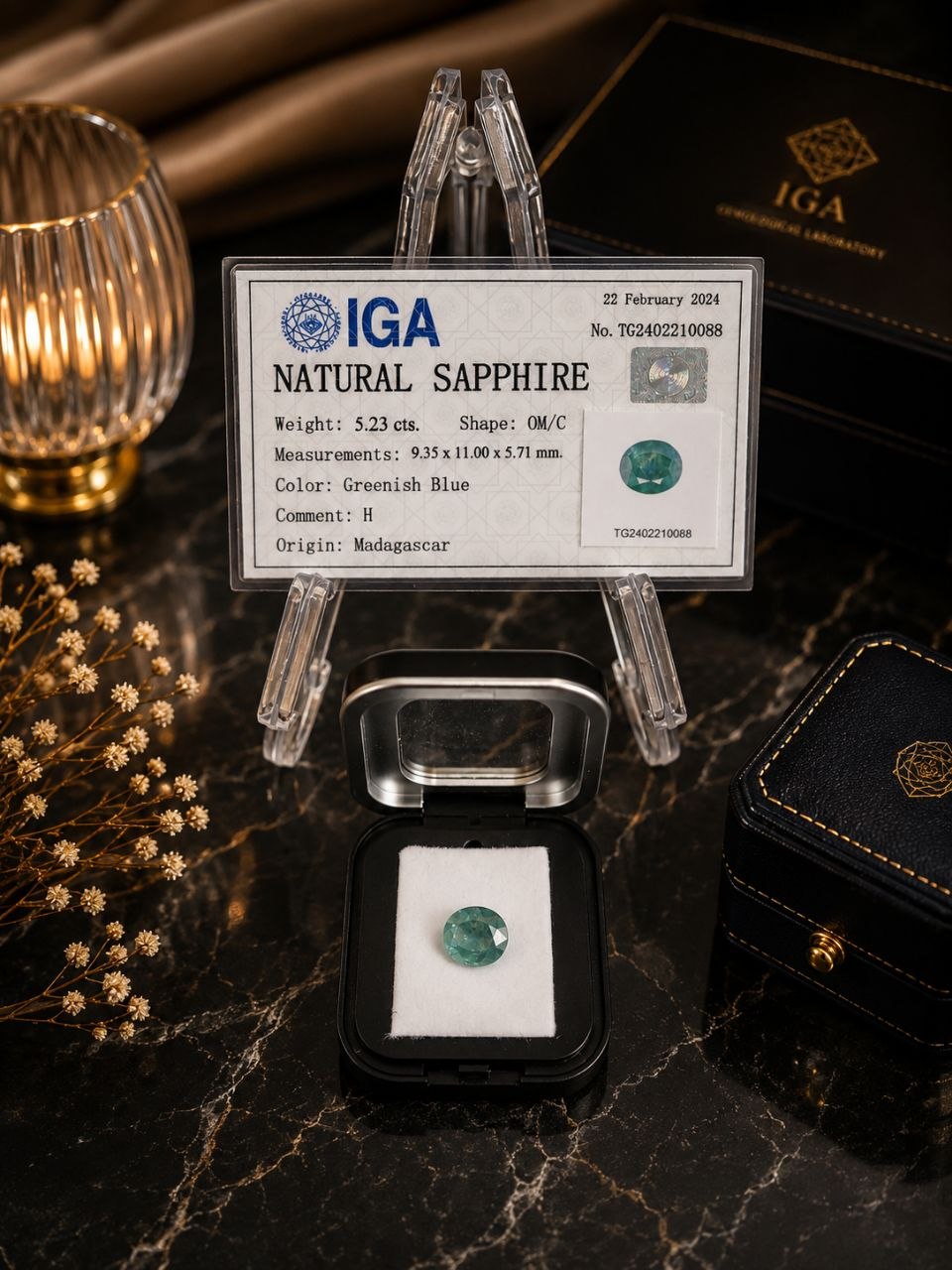
| Australia | Greenish blue to black | Zircon halos, color bending, color zoning |
| USA (Montana) | Steel blue | Crystals, angular growth zoning |
Beliefs
Sapphire is traditionally considered a good stone for meditation. It is believed to encourage thoughtful decision-making and bring understanding, insight, and clarity to its wearer.
Comments
Sapphire may contain crystals, fingerprint inclusions, and silky rutile inclusions. Rutile silk may occur in three directions, intersecting at angles of approximately 60° within the same planes. Other characteristics may include polysynthetic twinning, straight or angular color bands, color zoning, and evidence of heat treatment, irradiation, and diffusion treatment.
Other Names: Blue Sapphire
Reviews
There are no reviews yet.