
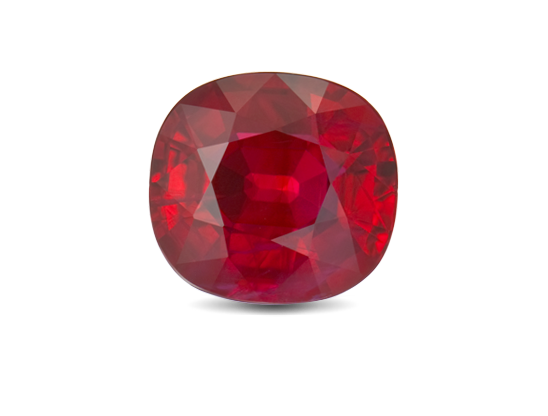
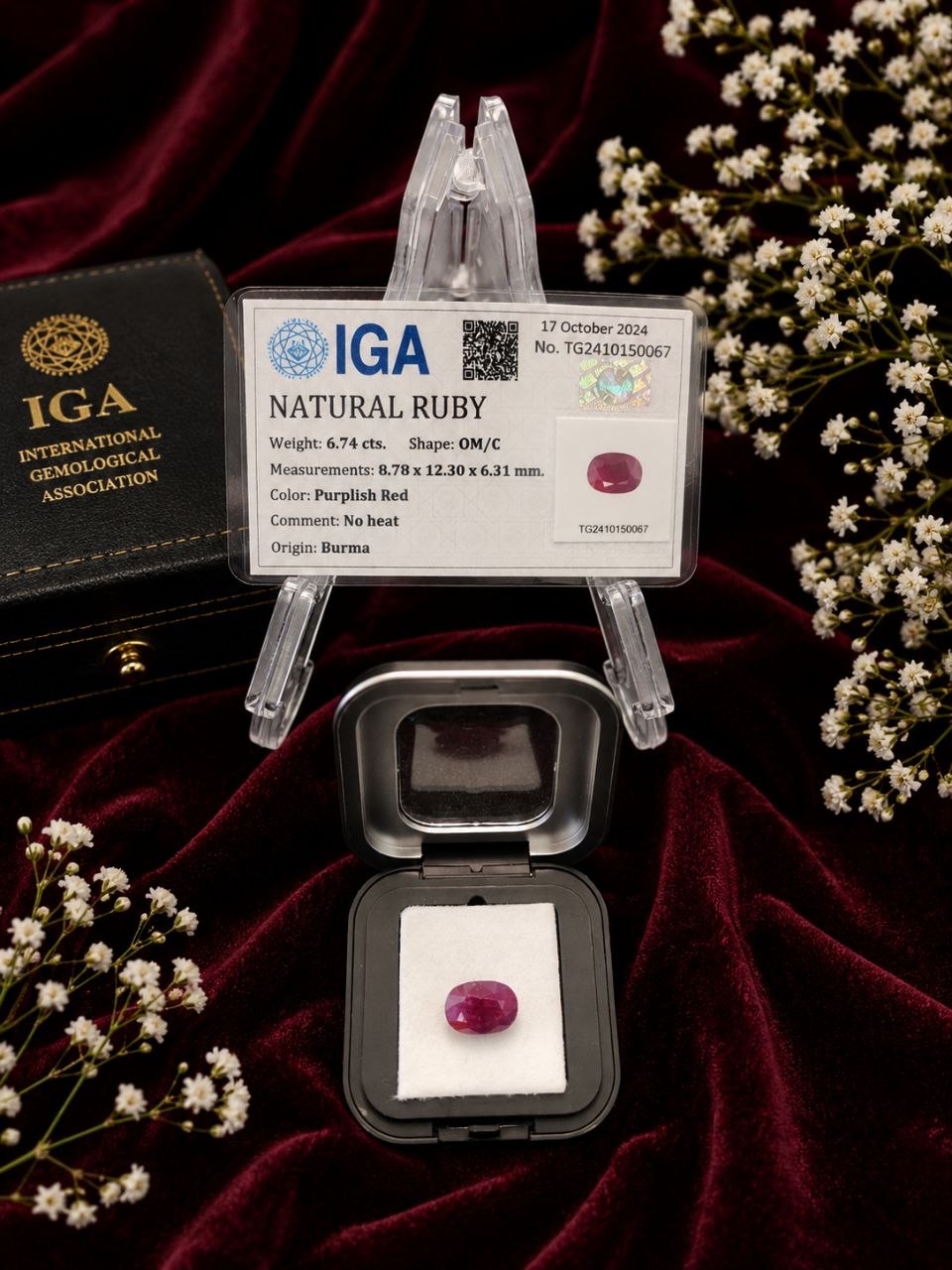
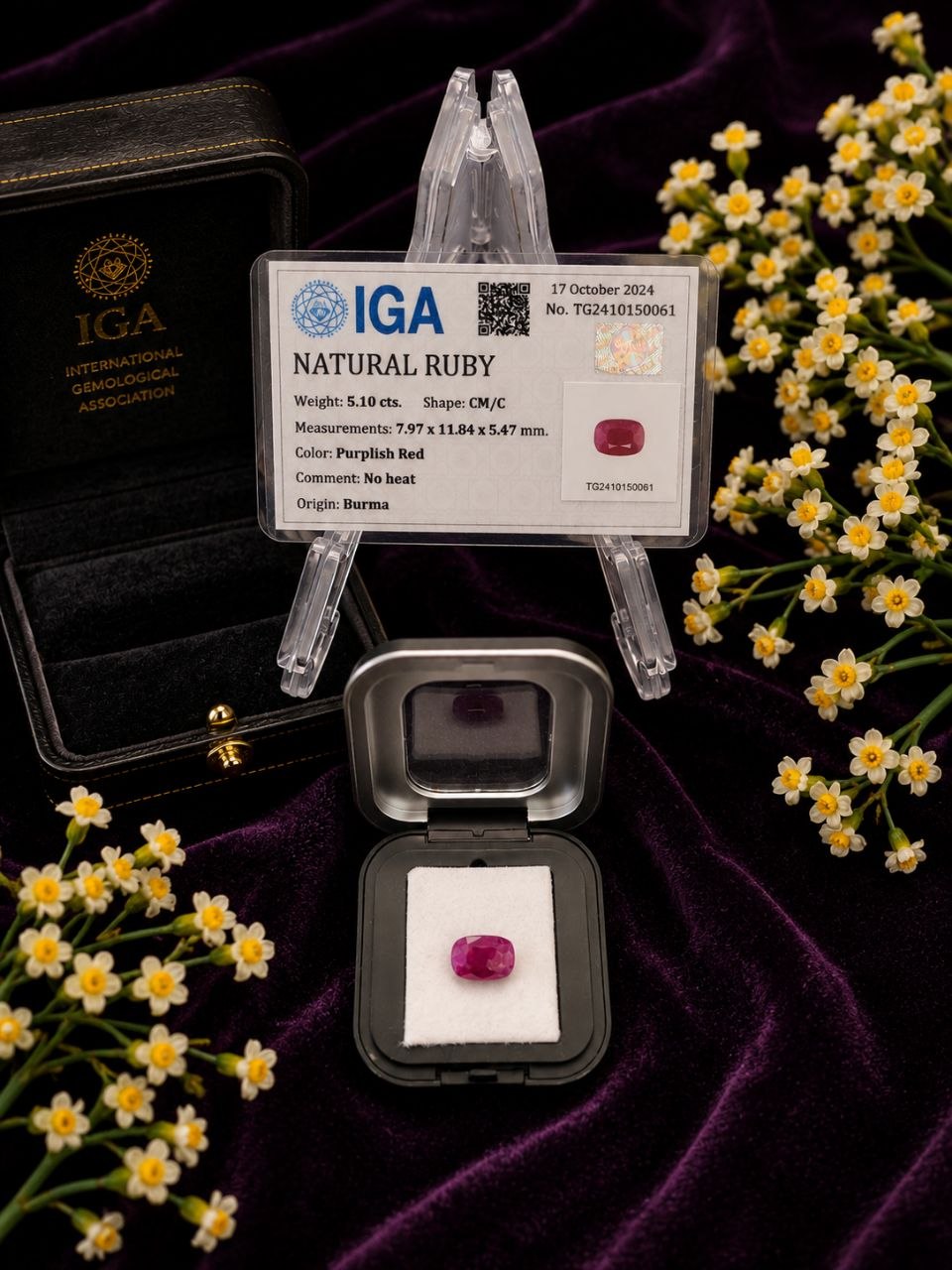
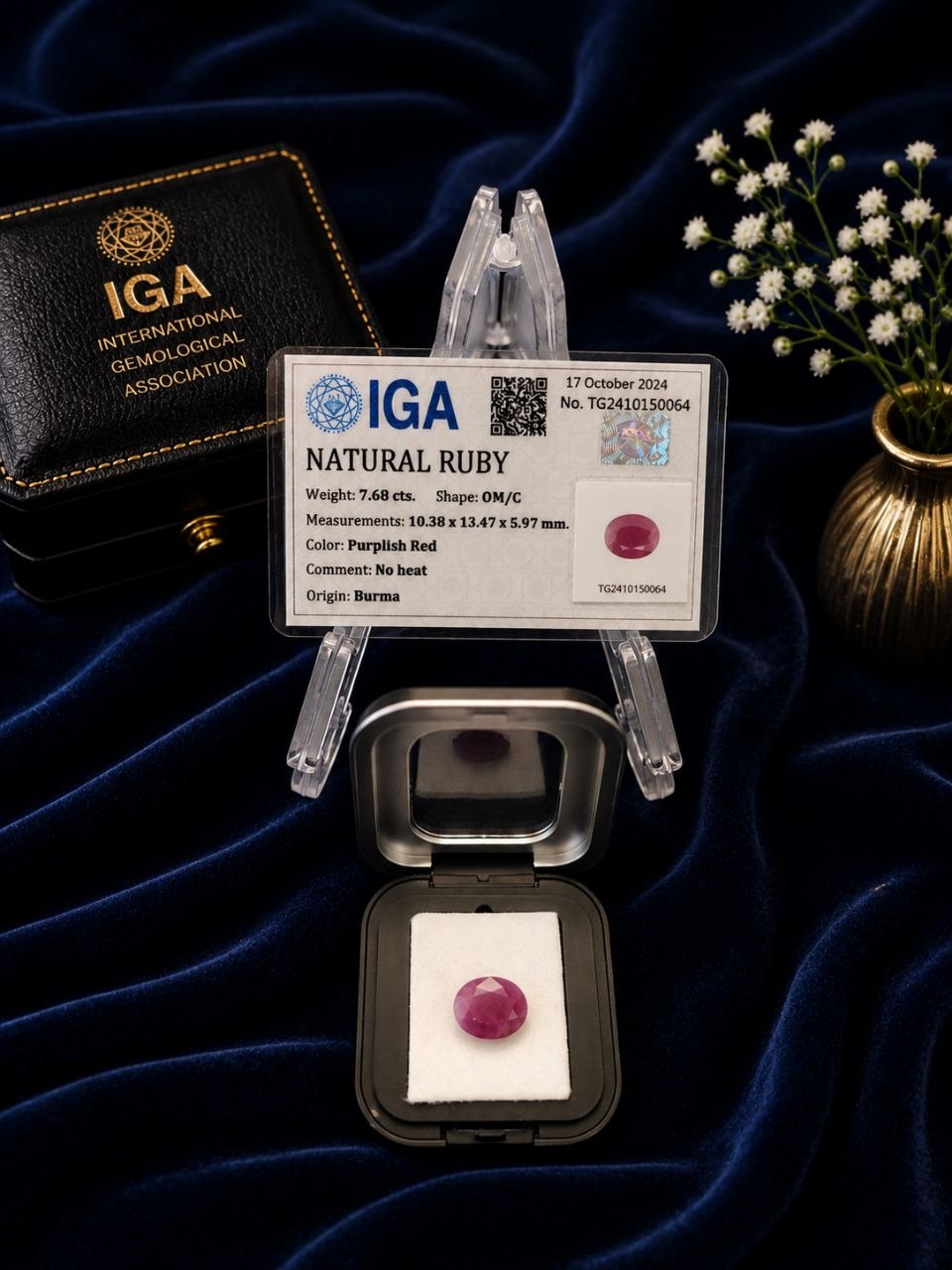
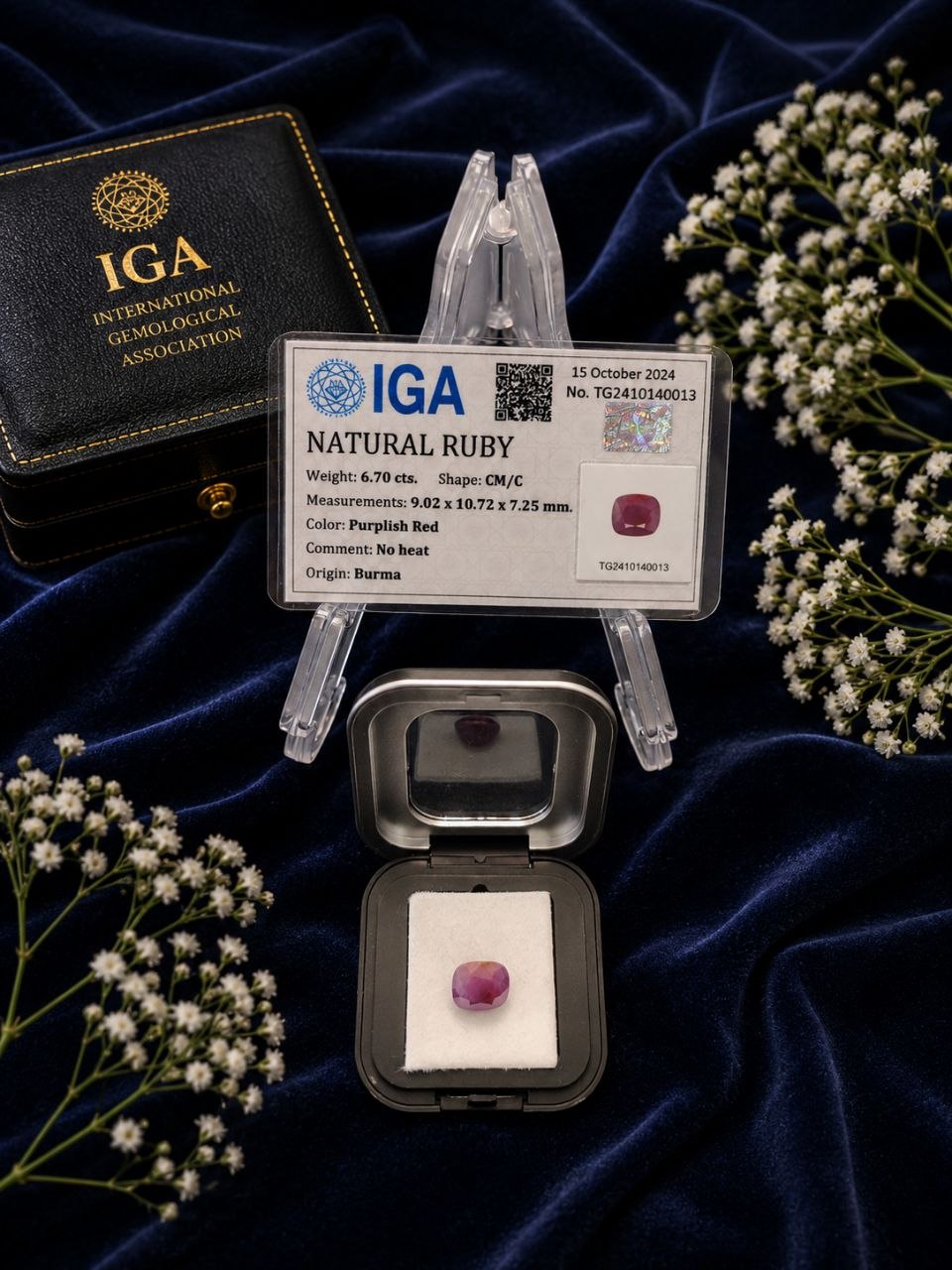
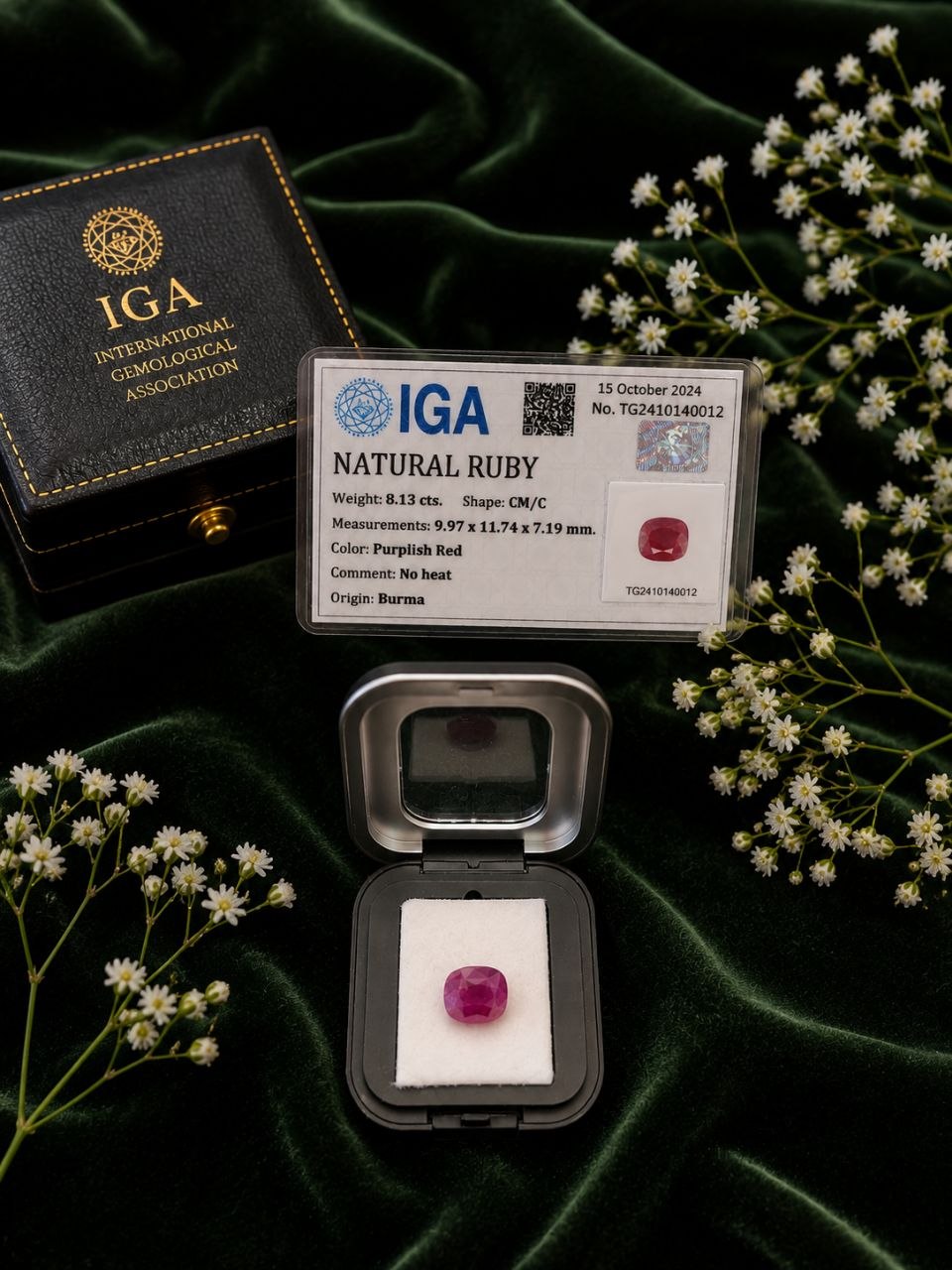
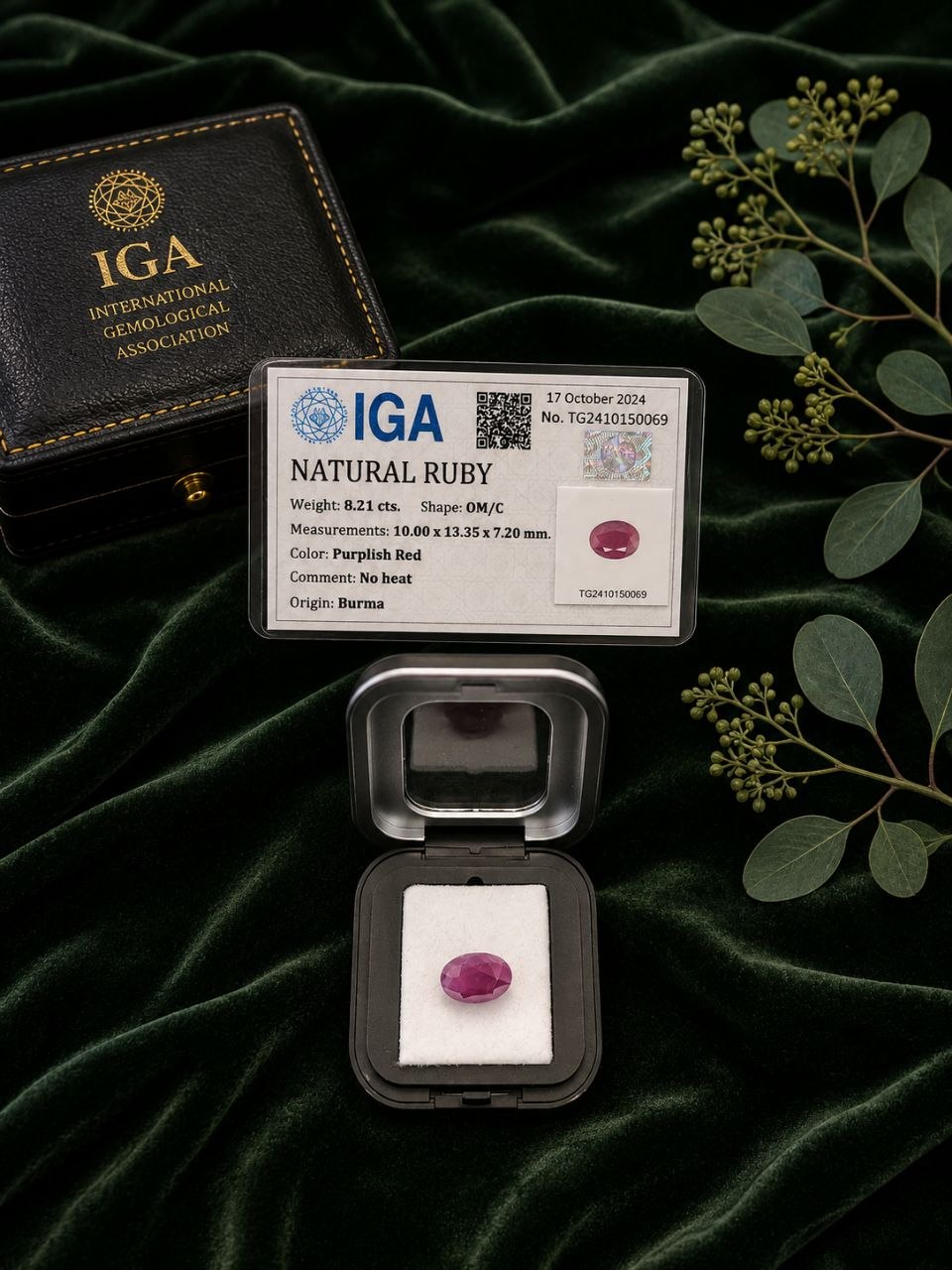
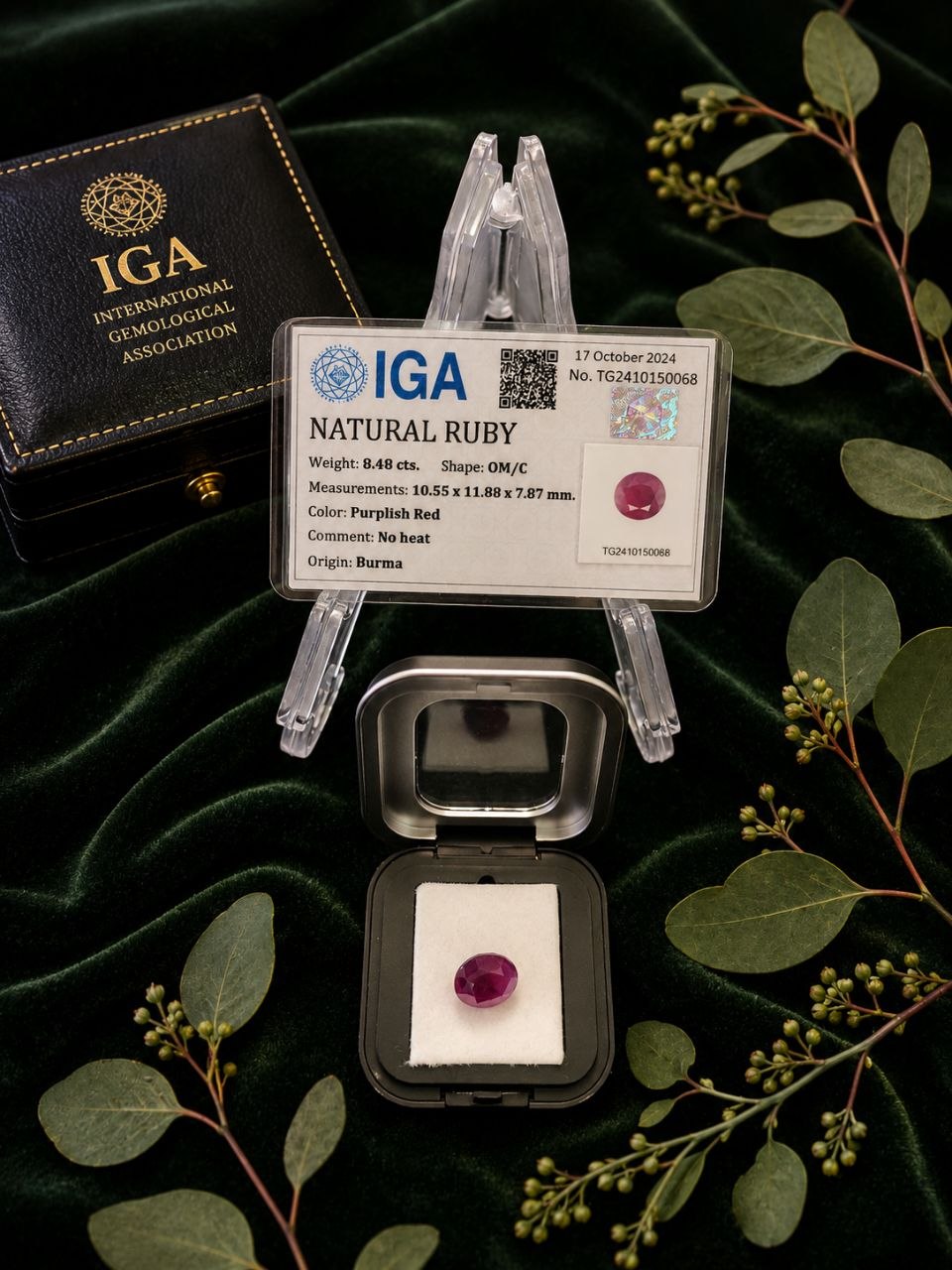
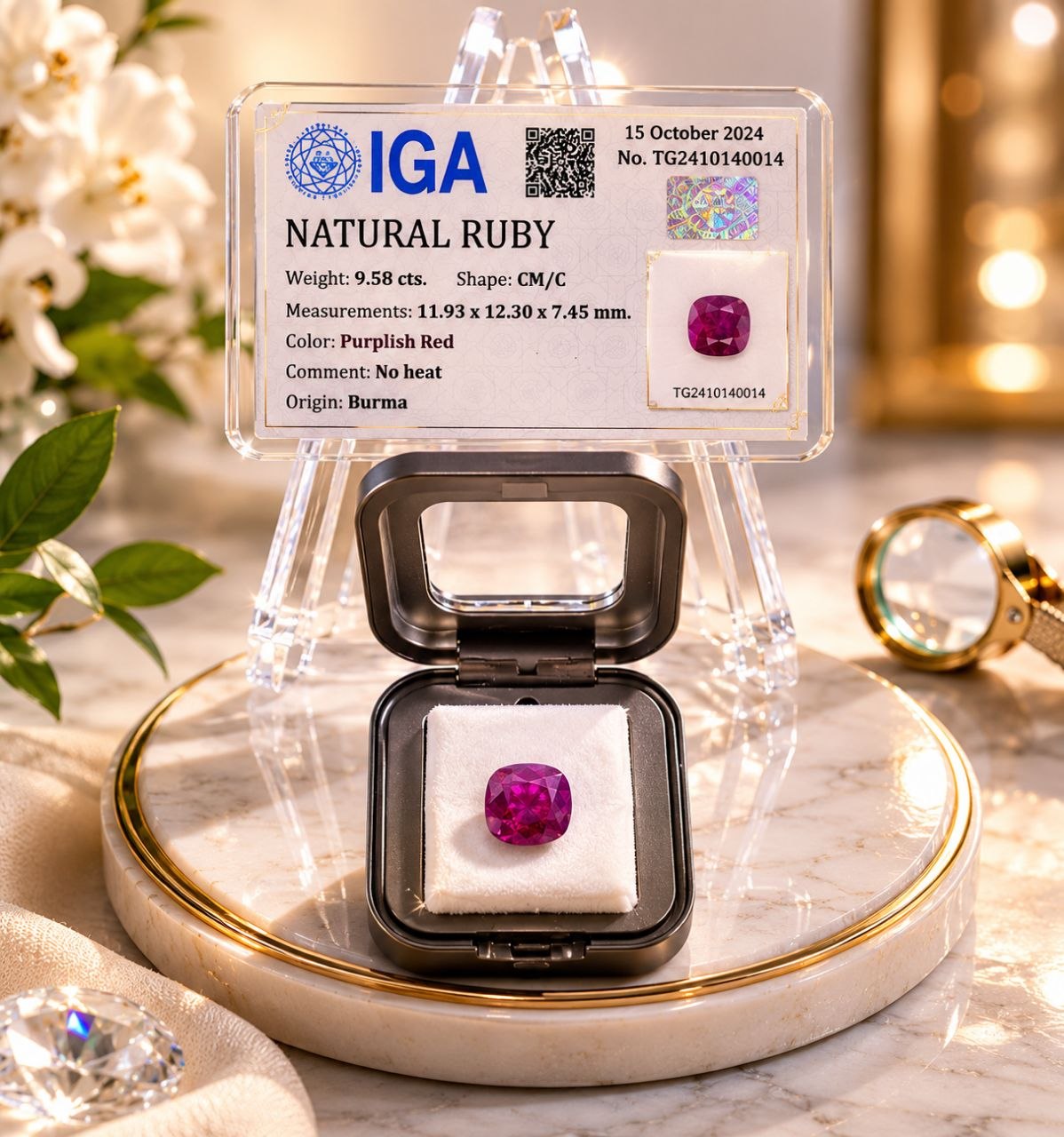
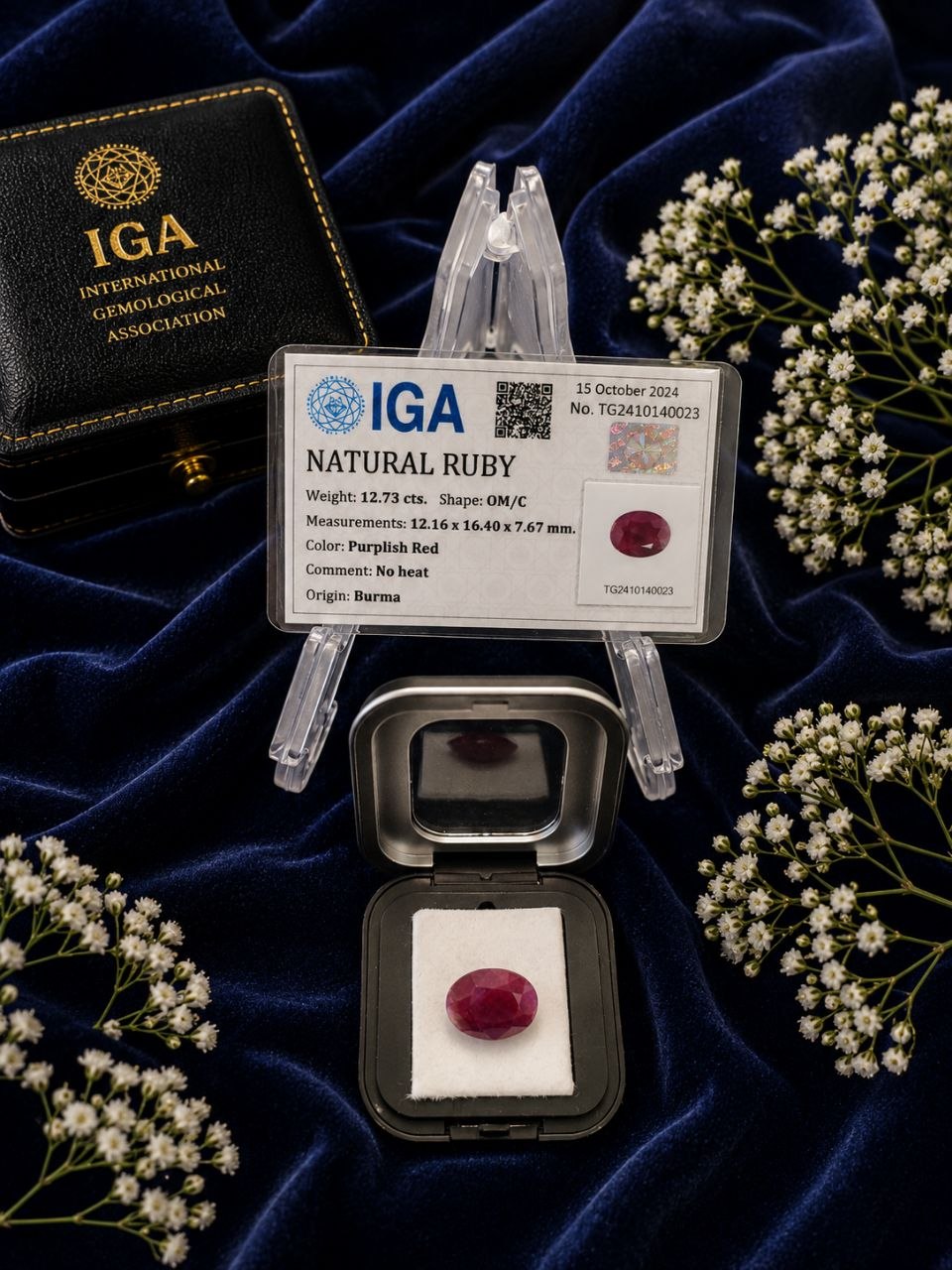
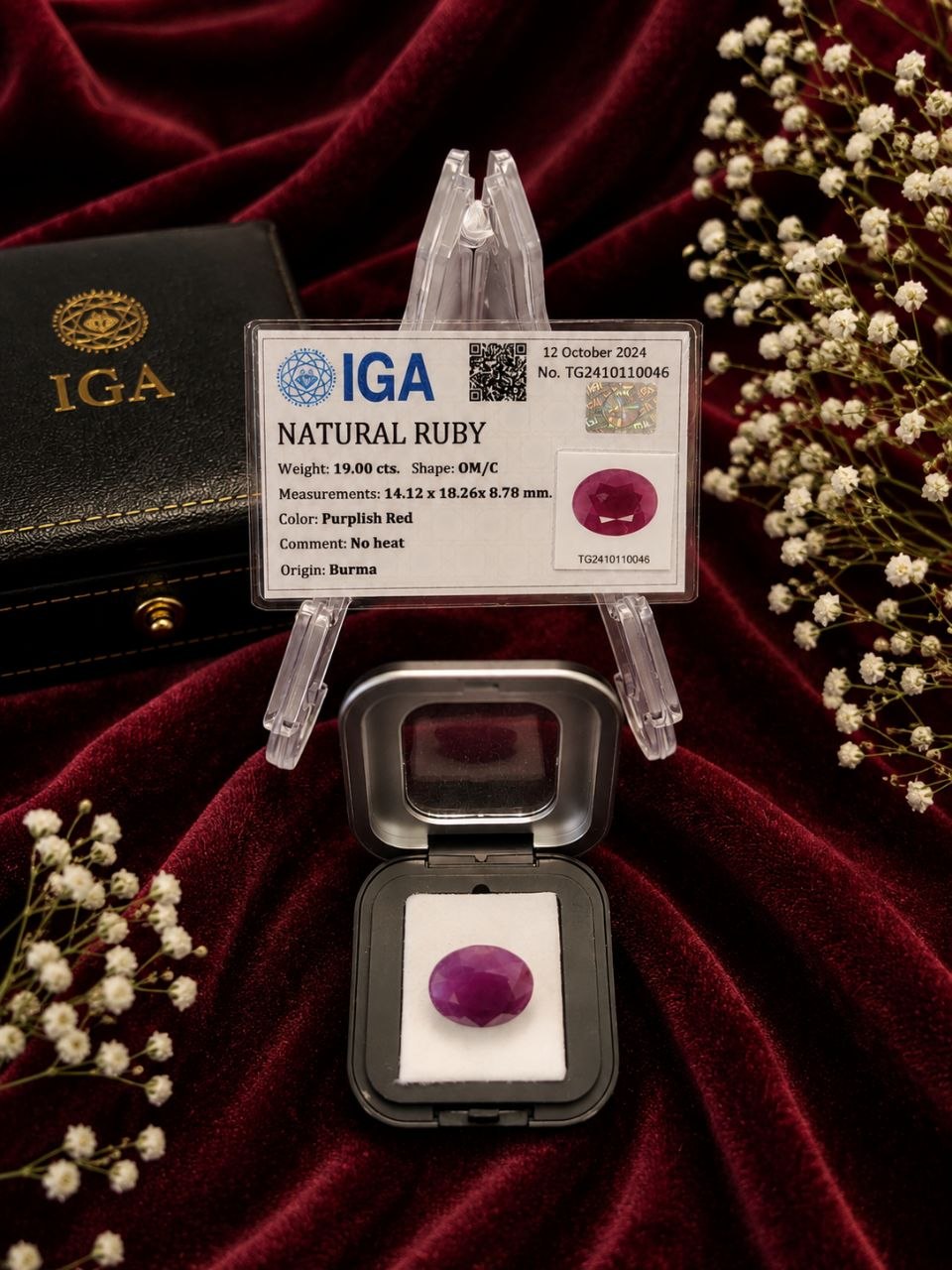
Description
Ruby
The name Ruby is derived from the Latin word “Rubeus,” meaning “red.” Some sources also suggest that the name Ruby may be derived from the Sanskrit word “Ratnaraj,” meaning “King of Colored Gemstones.”
Due to its beautiful color, physical properties, and rarity, Ruby is considered one of the most valuable gemstones in the world. Ruby is an aluminum oxide belonging to the Corundum group and is found in regional and contact metamorphic rocks as well as alluvial deposits.
Color
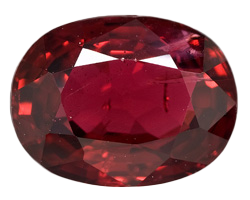
The intensity and quality of red color are among the most important factors in evaluating Ruby. In nature, Ruby occurs in shades of red, deep pink, brownish red, and purplish red.
Among Ruby colors, the most valuable is a vivid blue-red color, traditionally known as “Pigeon Blood Ruby.”
Very dark Rubies may have an appearance similar to Garnet, while very light-colored Rubies generally have lower value.
The primary coloring element in Ruby is Chromium. If the color has a noticeable brownish component, it may indicate the presence of a small amount of Iron.
Clarity
Rubies generally have lower clarity than Sapphires. When purchasing a high-quality Ruby, it is important to look for a stone without inclusions that are clearly visible to the naked eye.
It is also recommended to evaluate Rubies under different lighting conditions. Bright natural daylight, particularly around midday, is generally suitable for examining the color and appearance of Ruby. Fluorescent lighting is not considered ideal for evaluating Ruby color.
However, certain inclusions can be useful in identifying natural Ruby and distinguishing it from similar-looking stones (Imitations) and laboratory-grown or Synthetic materials.
Some common inclusions found in Ruby include:
1. Guest Crystals
Crystals of other minerals, such as manganite, pyrite, calcite, garnet, boehmite, and others, may occur within the stone.
2. Needles
Thin, elongated needle-like crystals, commonly composed of Rutile, may be present within the Ruby.
3. Parting
Parting may appear as diamond-shaped fractures or structural separations within the stone.
4. Liquid Inclusions
Liquid inclusions may occur as Liquid Fingerprints or Liquid Feathers within healed fractures.
5. Color Zoning
Different areas of the gemstone may exhibit variations in color.
6. Color Banding
Color banding is one of the important internal characteristics found in the Corundum group and appears as straight or angular bands and stripes of different colors.
| Source | Color | Common Inclusions |
| Myanmar (Burma) | Red, pinkish red, purplish red | Crystals, silk |
| Thailand | Deep red to brownish red | Crystals, twinning planes |
| Sri Lanka | Red and pink with light tone | Color zoning, long needle-like crystals, haloed zircon crystals |
| Vietnam | Purplish red, purplish pink | Color zoning, twinning, small crystal bands |
| Tanzania | Orange-red | Needle-like inclusions |
| Pakistan and Afghanistan | Similar to Burmese color in smaller sizes | — |
Treatments and Enhancements
Rubies are considered precious gemstones, and their high value has encouraged the development and use of various treatments to improve their color, clarity, and appearance.
Today, a large proportion of Rubies are heat-treated to improve their color and overall appearance. The colors produced through this treatment are generally considered stable.
Another treatment, commonly known as Glass Filling or Glass-Filled Ruby, involves heating the Ruby in the presence of a glass-like material so that cracks and fractures within the stone are filled. This can improve the apparent clarity and sometimes enhance the overall appearance of the stone.
This treatment is particularly associated with certain Rubies from Mong Hsu, Myanmar.
Another common treatment involves the removal or enhancement of rutile silk through heating. Many Rubies from Myanmar and Sri Lanka contain rutile inclusions. Heating can reduce the visibility of these inclusions and improve the apparent transparency of the stone.
Phenomena
The Asterism phenomenon occurs in Ruby when the stone contains fine, needle-like inclusions of rutile silk oriented in three directions and intersecting at approximately 60-degree angles.
When light enters the gemstone and interacts with these inclusions, it produces a distinctive star-like reflection. For this phenomenon to be clearly displayed, the Ruby is generally cut as a Cabochon.
Star Rubies typically display a six-rayed star with sharp rays. High-quality Pigeon Blood Rubies displaying a sharp six-rayed star can be particularly valuable.
Many lower-priced Star Rubies are sourced from India.
Sources
Important historical sources of Ruby include the famous Mogok mines in Myanmar (Burma) and Sri Lanka (Ceylon).
Fine Ruby specimens have also been found in Vietnam, Thailand, Cambodia, Kenya, Tanzania, Afghanistan, Pakistan, China (Yunnan), and Madagascar.
Lower-quality Ruby material is also found in India and the United States (North Carolina).
Beliefs
In traditional beliefs, Ruby is considered a symbol of life, wealth, nobility, and passion. It is believed to fill the heart with love and hope for the future and to enhance energy, confidence, courage, bravery, and emotional strength.
Some traditional beliefs also suggest that a change in the stone’s color may warn its owner of unfortunate news, illness, or bad luck.
These properties are part of traditional gemstone beliefs and have not been scientifically established.
Comments
Ruby may contain crystals, fingerprint inclusions, and silky rutile inclusions that occur in three directions and intersect at approximately 60-degree angles within the same planes.
Other characteristics may include polysynthetic twinning, straight or angular color bands, and evidence of various treatments such as heat treatment, irradiation, and diffusion.
Other Names: Red Ruby, Anthrax, Corundum, Oriental Ruby, Rubin.
Reviews
There are no reviews yet.