
Description
Amber
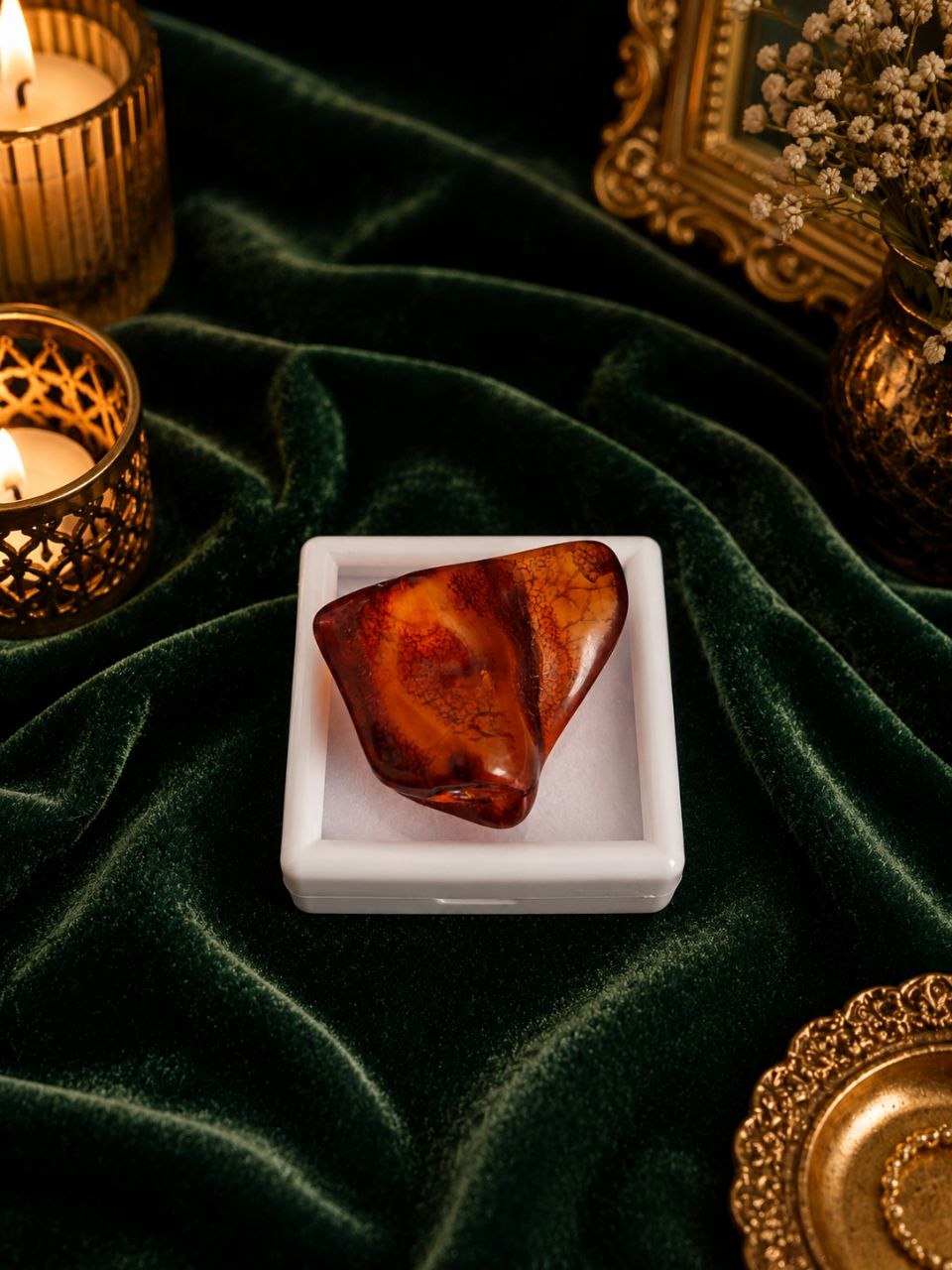
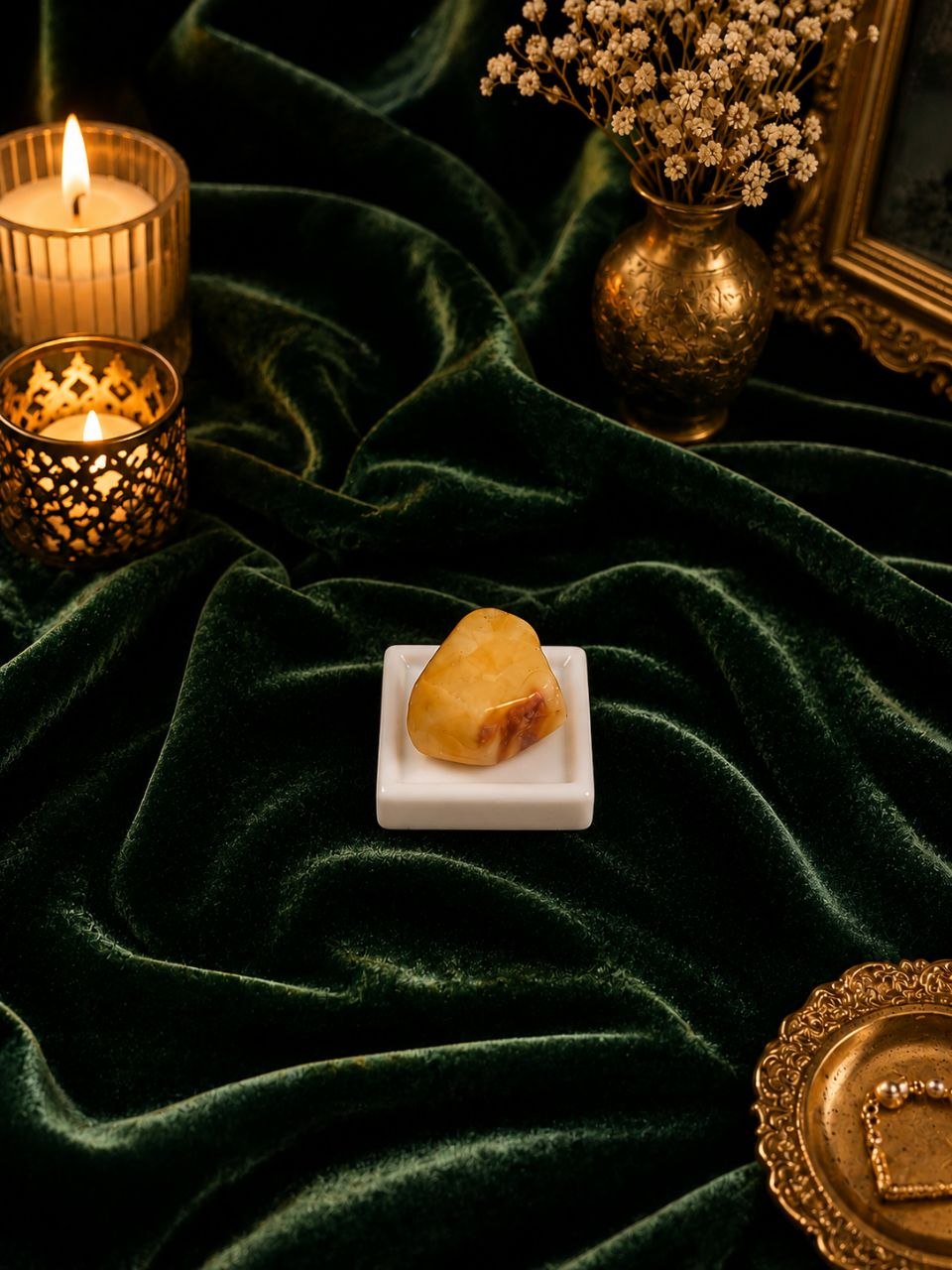
Amber is a natural organic gemstone formed from the fossilized resin of ancient trees. Over millions of years, this resin was preserved and transformed under suitable geological conditions, creating one of the most distinctive organic gemstones used in jewelry and decorative objects.
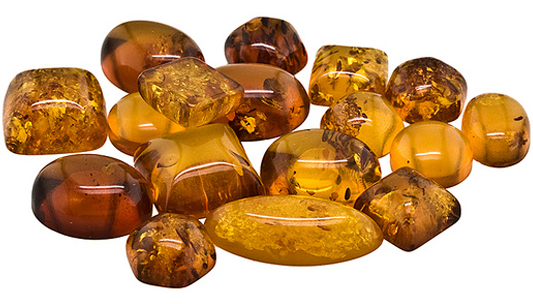
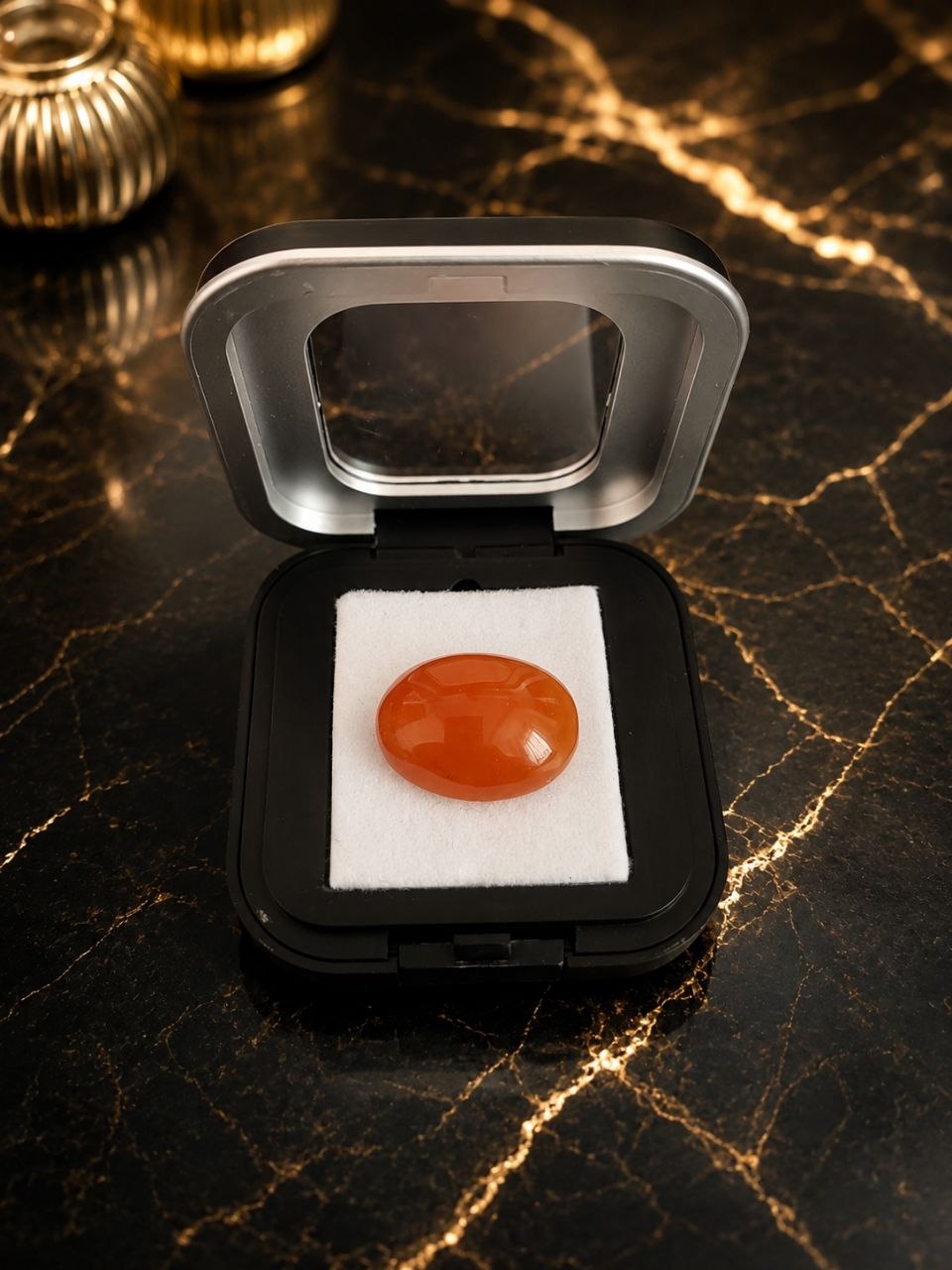
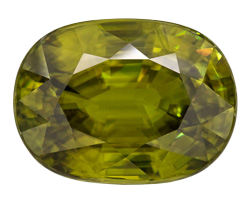
Amber occurs naturally in a variety of colors, including yellow, golden yellow, orange, brown, red, green, blue, and even colorless. Blue Amber is particularly rare and highly valued due to its unusual appearance and distinctive optical properties.
Inclusions and Fossils
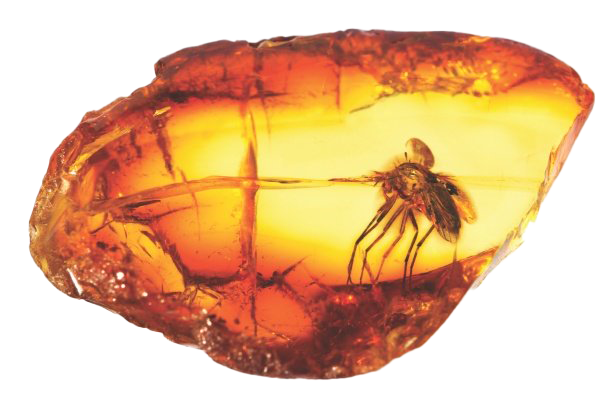
The sticky resin of ancient trees could trap insects, plants, and other organic materials. As a result, some pieces of Amber contain remarkably preserved insects, plant remains, and other natural inclusions.
Unlike many mineral gemstones, inclusions can actually increase the value of Amber, especially when an insect or plant fragment is well preserved and clearly visible.
Certain mineral inclusions, such as Pyrite, may also contribute to unusual colors or visual effects found in some types of Amber.
Static Electricity
One of the well-known characteristics of Amber is its ability to produce static electricity. When Amber is rubbed with wool or another suitable fabric, it can become electrically charged and attract very small, lightweight objects.
Major Sources
Some of the most important sources of Amber are the Baltic Sea region and the Dominican Republic. Amber specimens with extremely ancient geological ages have been discovered in these regions.
Care and Maintenance
Amber is relatively soft and delicate compared with most mineral gemstones and is particularly sensitive to heat, chemicals, and scratches.
To preserve its appearance and luster, avoid exposing Amber to high temperatures, perfumes, harsh chemicals, and abrasive surfaces. Cleaning it gently with a soft, slightly damp cloth is recommended.
Reviews
There are no reviews yet.