
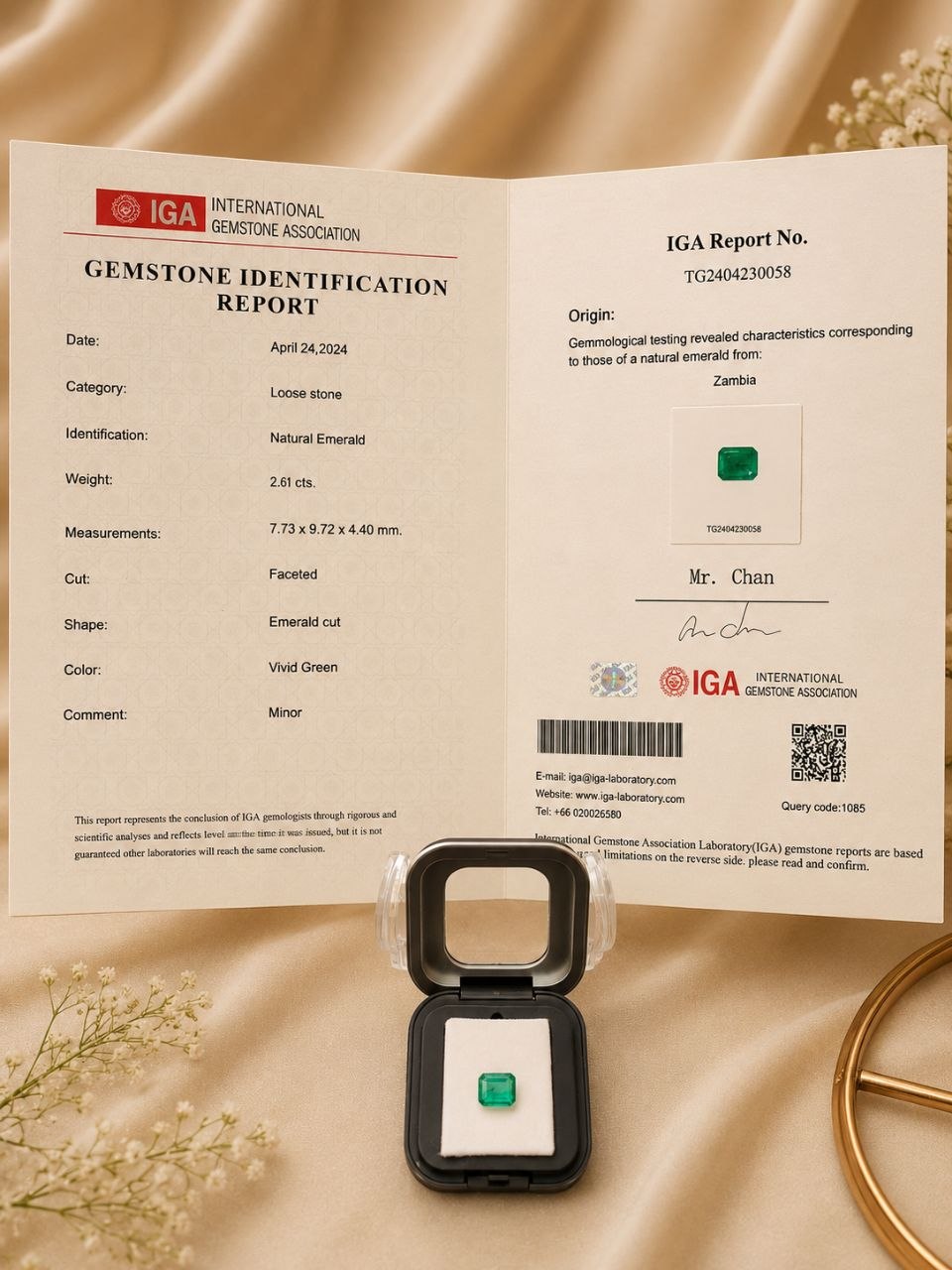
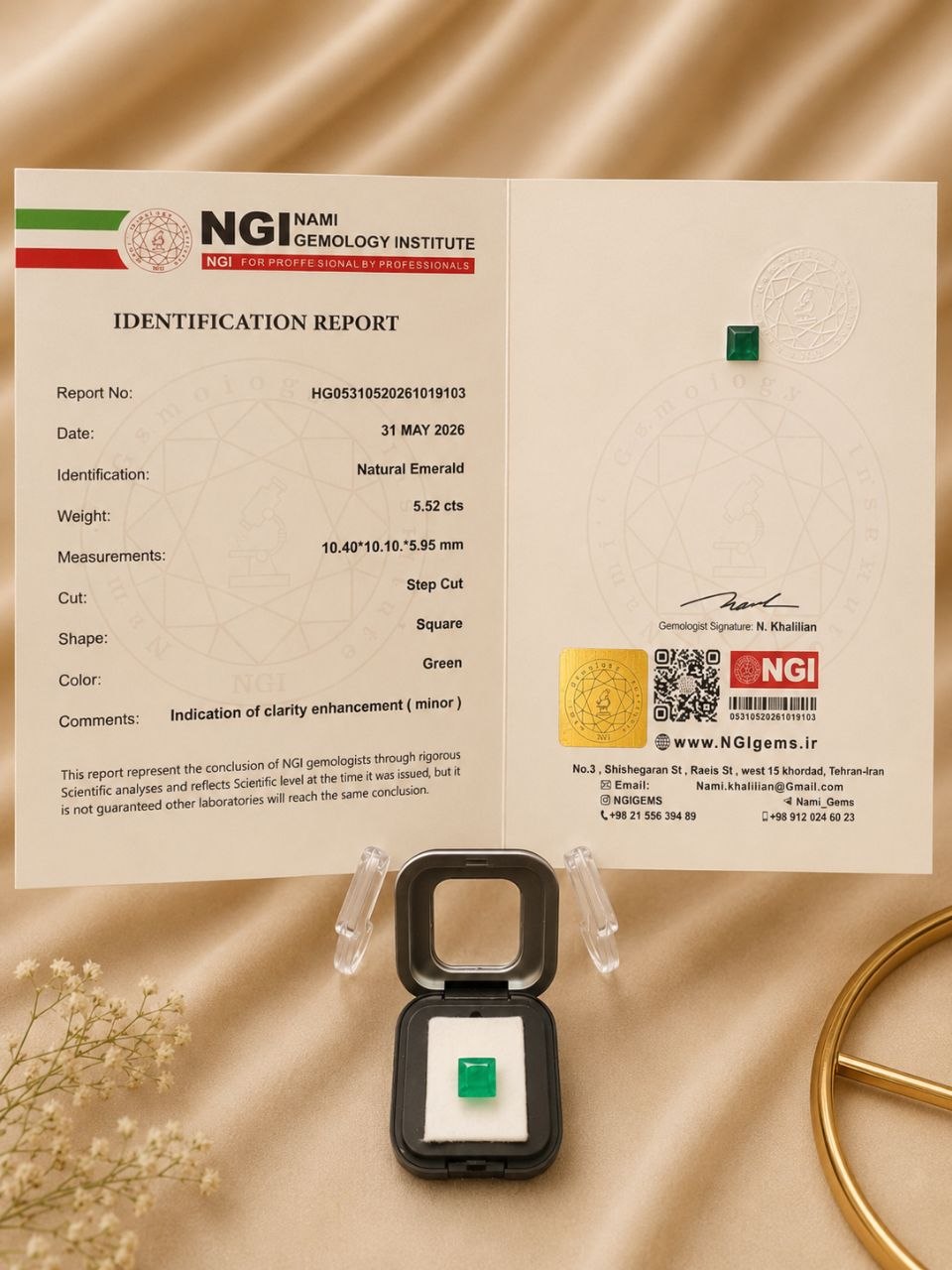
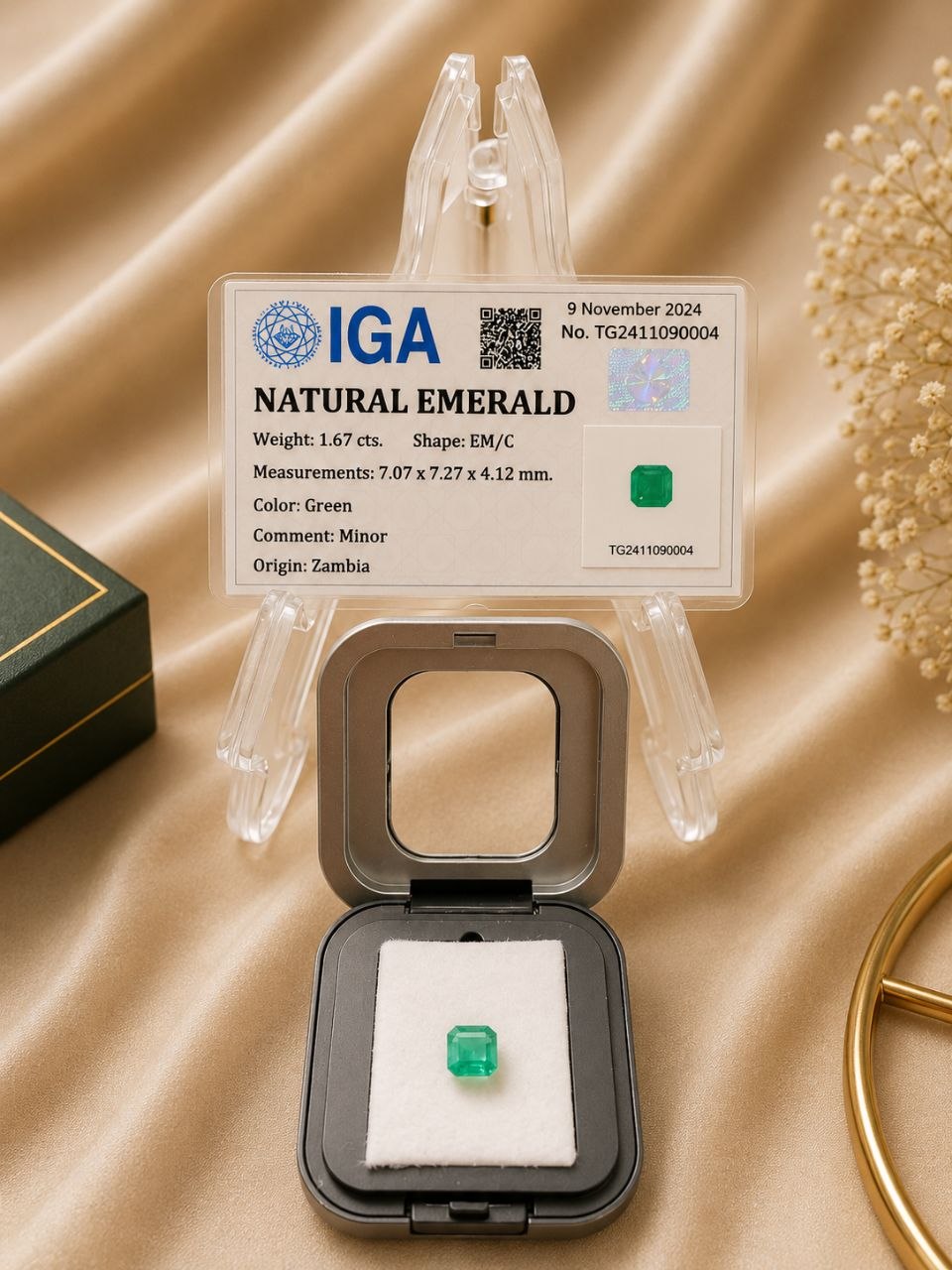
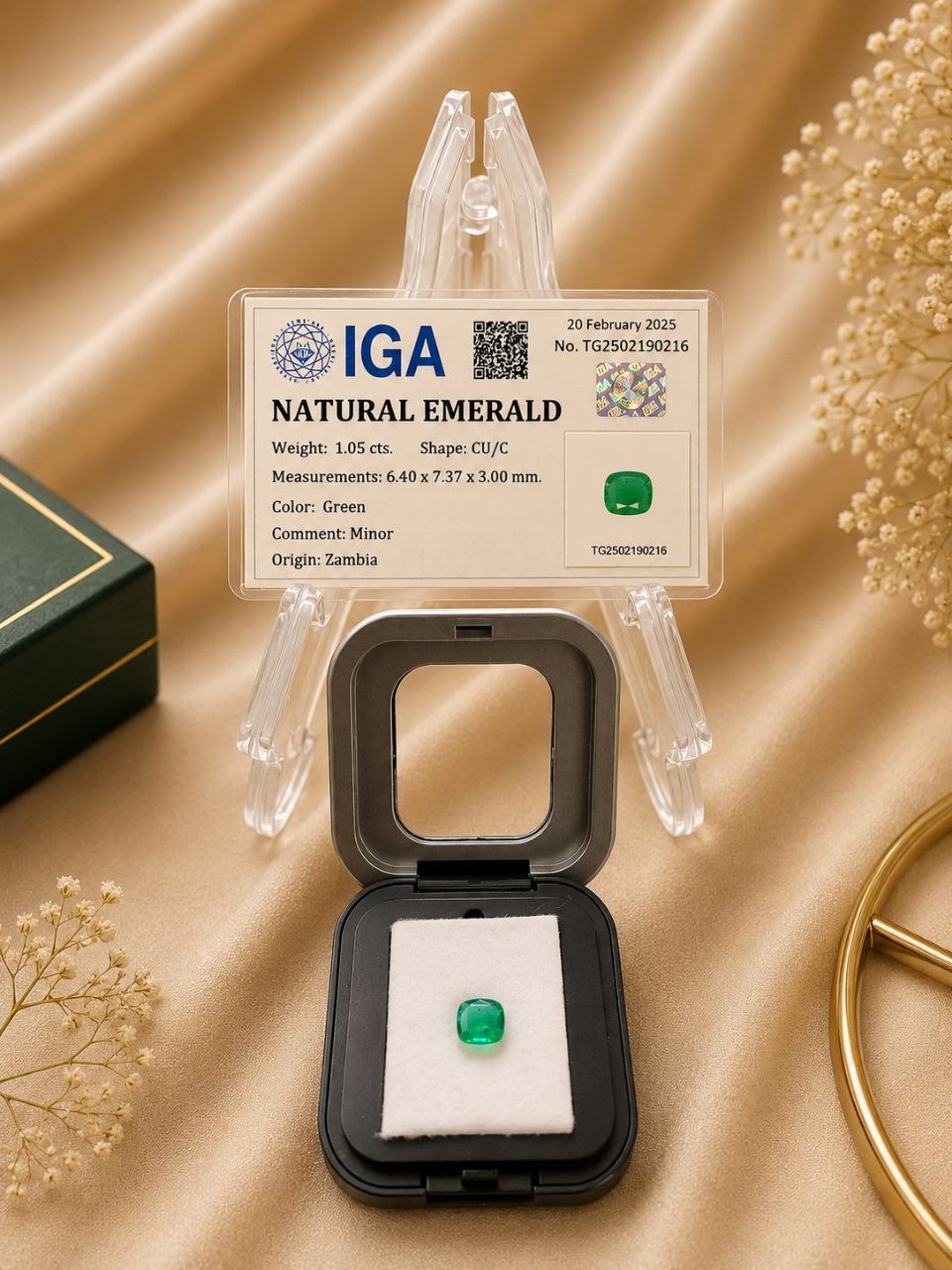
Description
Green Emerald, a Precious Gemstone
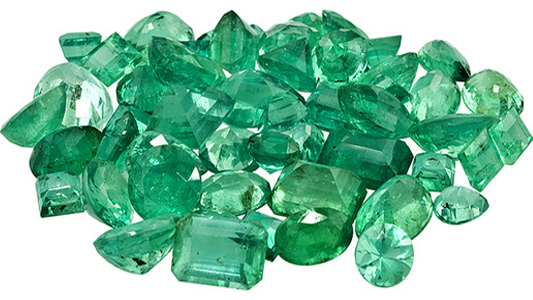
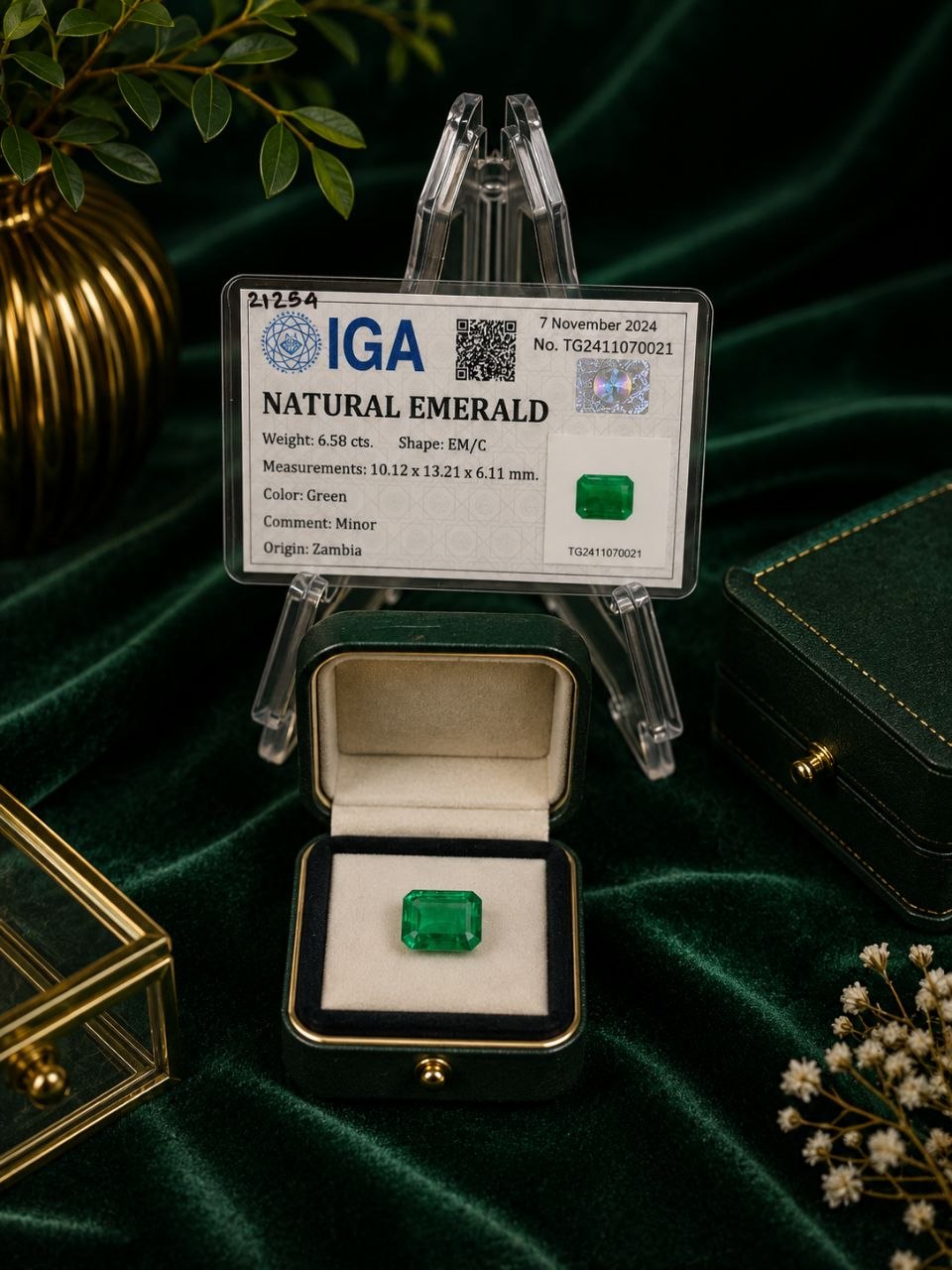
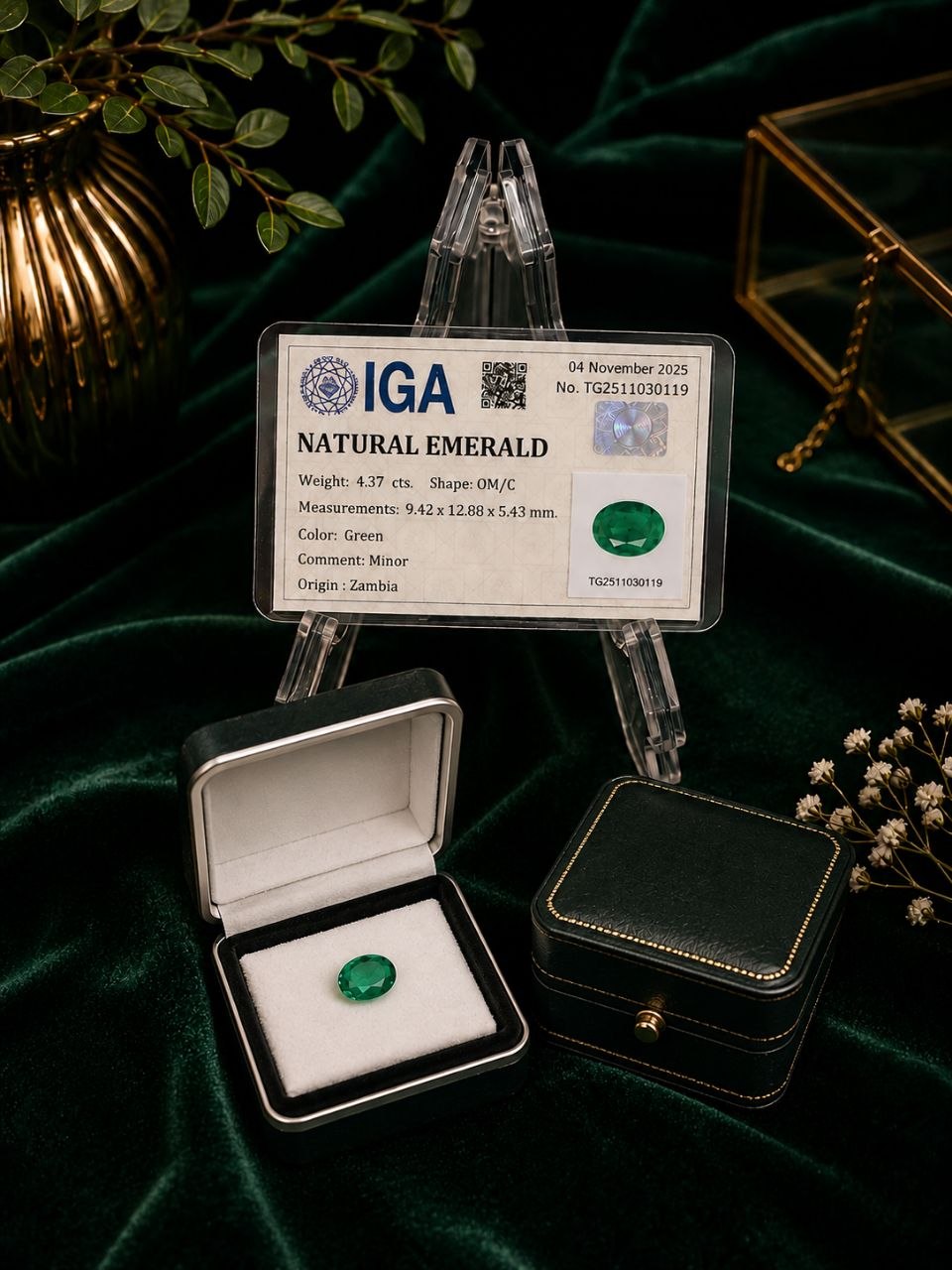
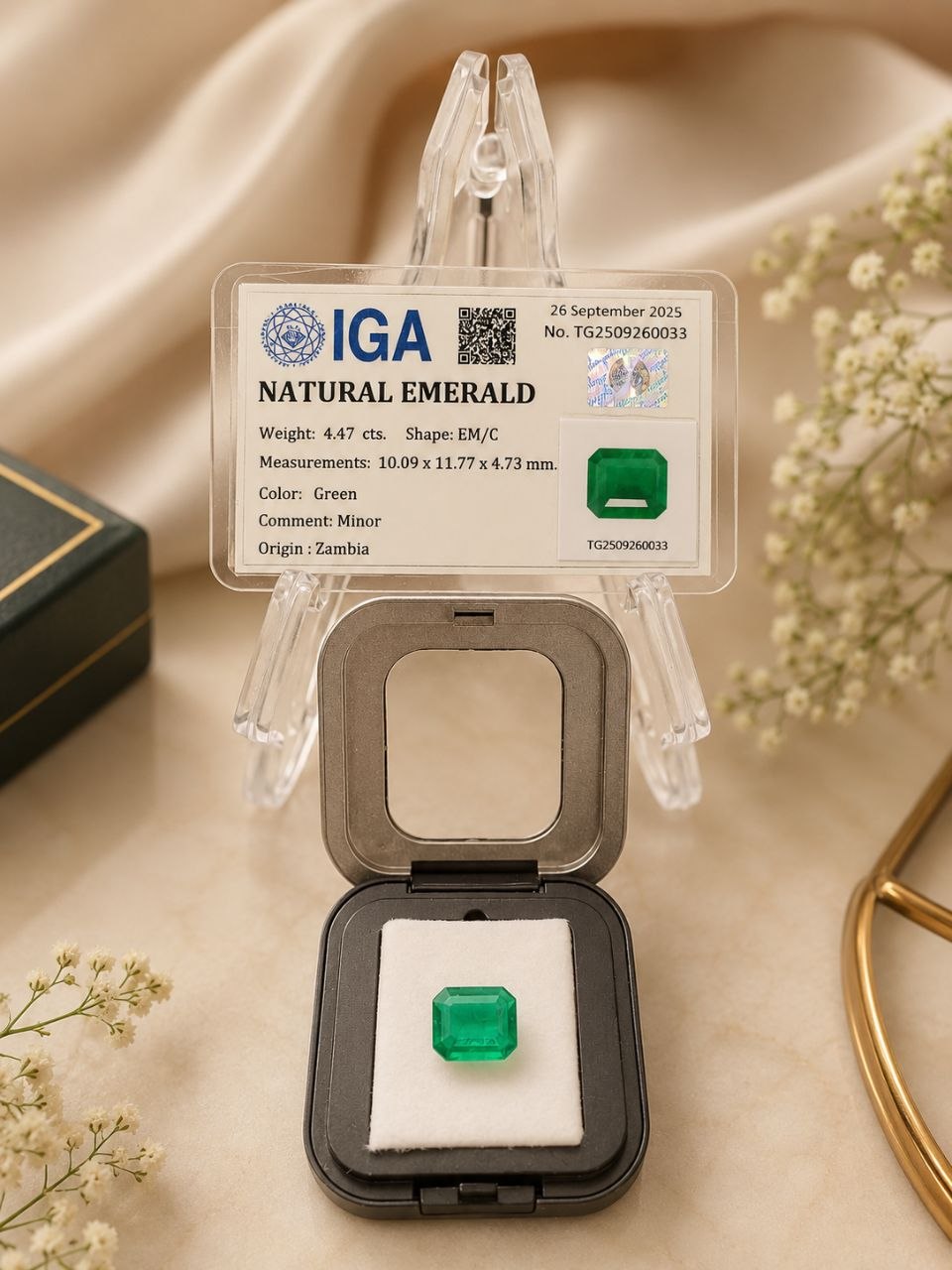
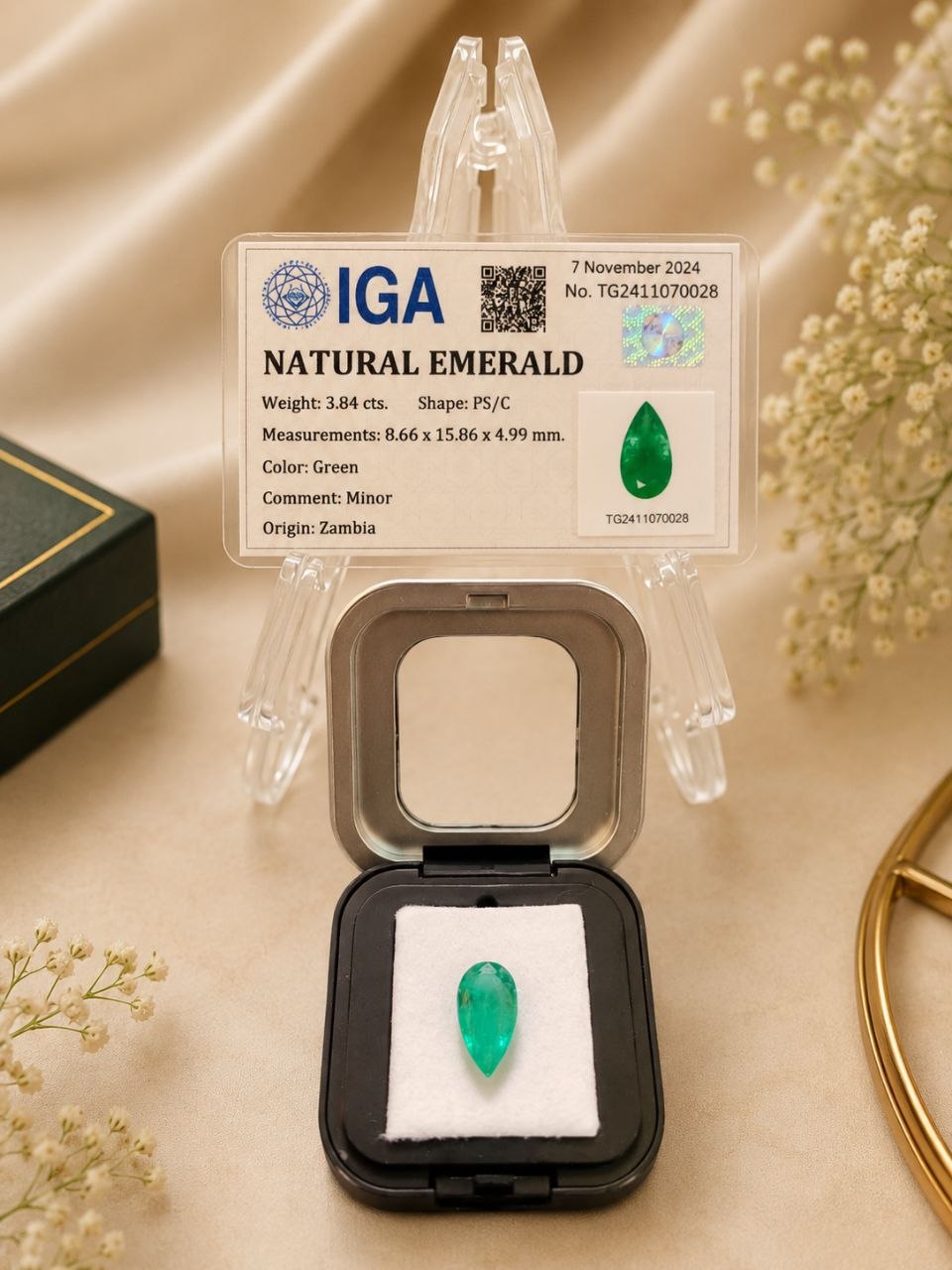
Green Emerald is the green variety of the Beryl mineral family and is the most famous and valuable type of green gemstone. Its beautiful green color, combined with its durability and rarity, makes this gemstone highly valuable. Emeralds with a deep green color are generally more desirable. In fact, light-colored green emeralds are typically less expensive. Stones with extremely pale green colors are not considered Green Emeralds at all and are instead classified as Green Beryl. In some cases, this stone may undergo heat treatment, which can cause its color to become more blue and transform it into Aquamarine.
Everything About Green Emerald
In addition to Green Emerald, the Beryl mineral family includes several other important gem varieties, such as blue Aquamarine, pink Morganite, and yellow Heliodor / Golden Beryl. Pure Beryl is colorless or white; the green color of Emerald is usually caused by the presence of chromium impurities.
Green Emerald is considerably more valuable than other gem varieties of Beryl and is one of the few high-value gemstones in the world.
One of the main weaknesses of Green Emerald is the presence of inclusions and fractures. Flawless Green Emeralds are extremely rare and can be exceptionally expensive. Some people actually prefer emeralds with minor inclusions over completely flawless emeralds, and this preference is well recognized in the gemstone market.
These inclusions and fractures can often be concealed through oiling or by using synthetic oils and other filling substances. This treatment is very common in the jewelry industry.
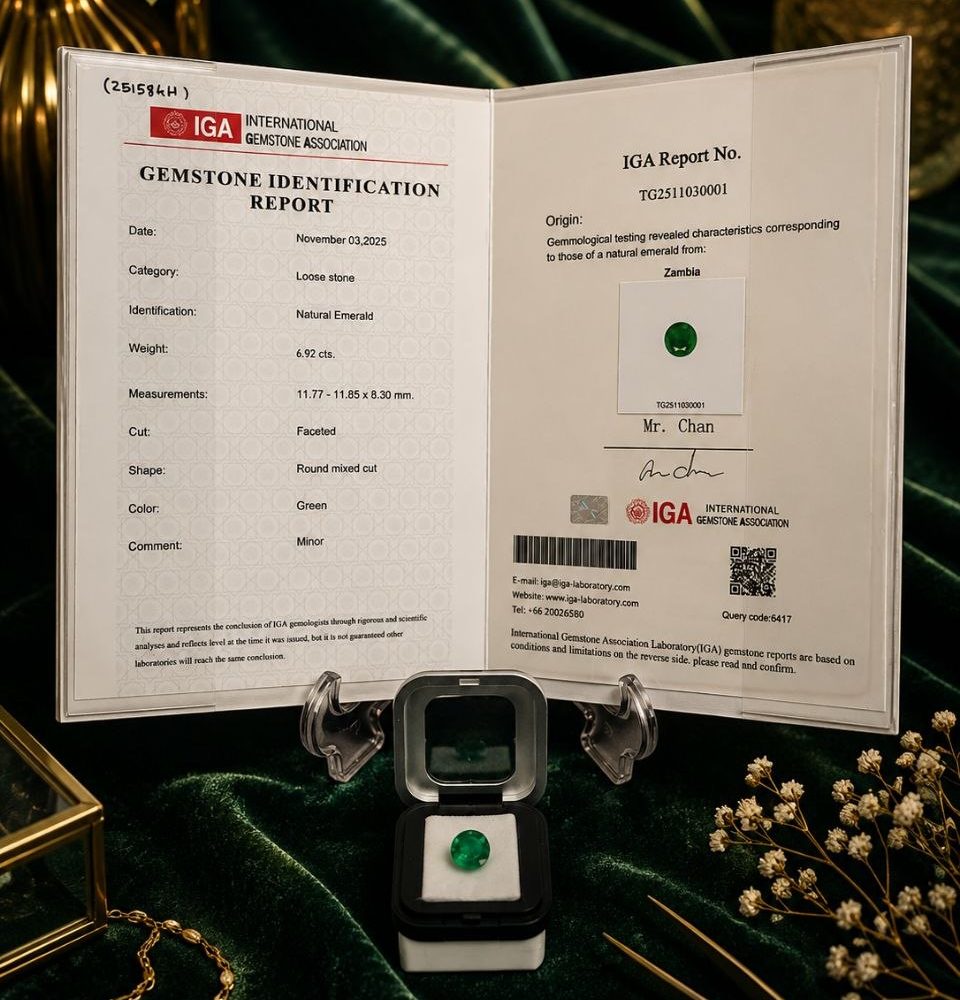
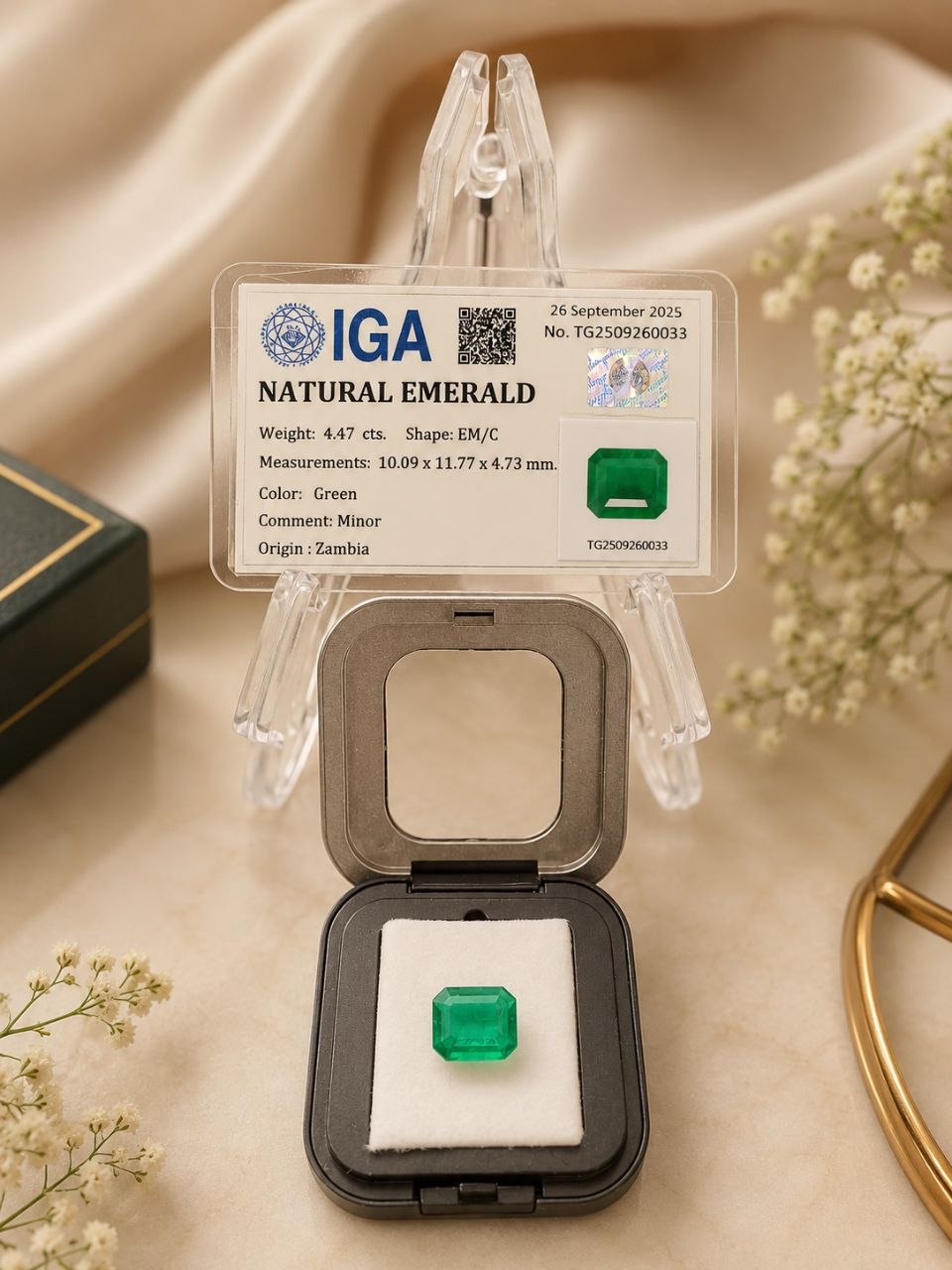
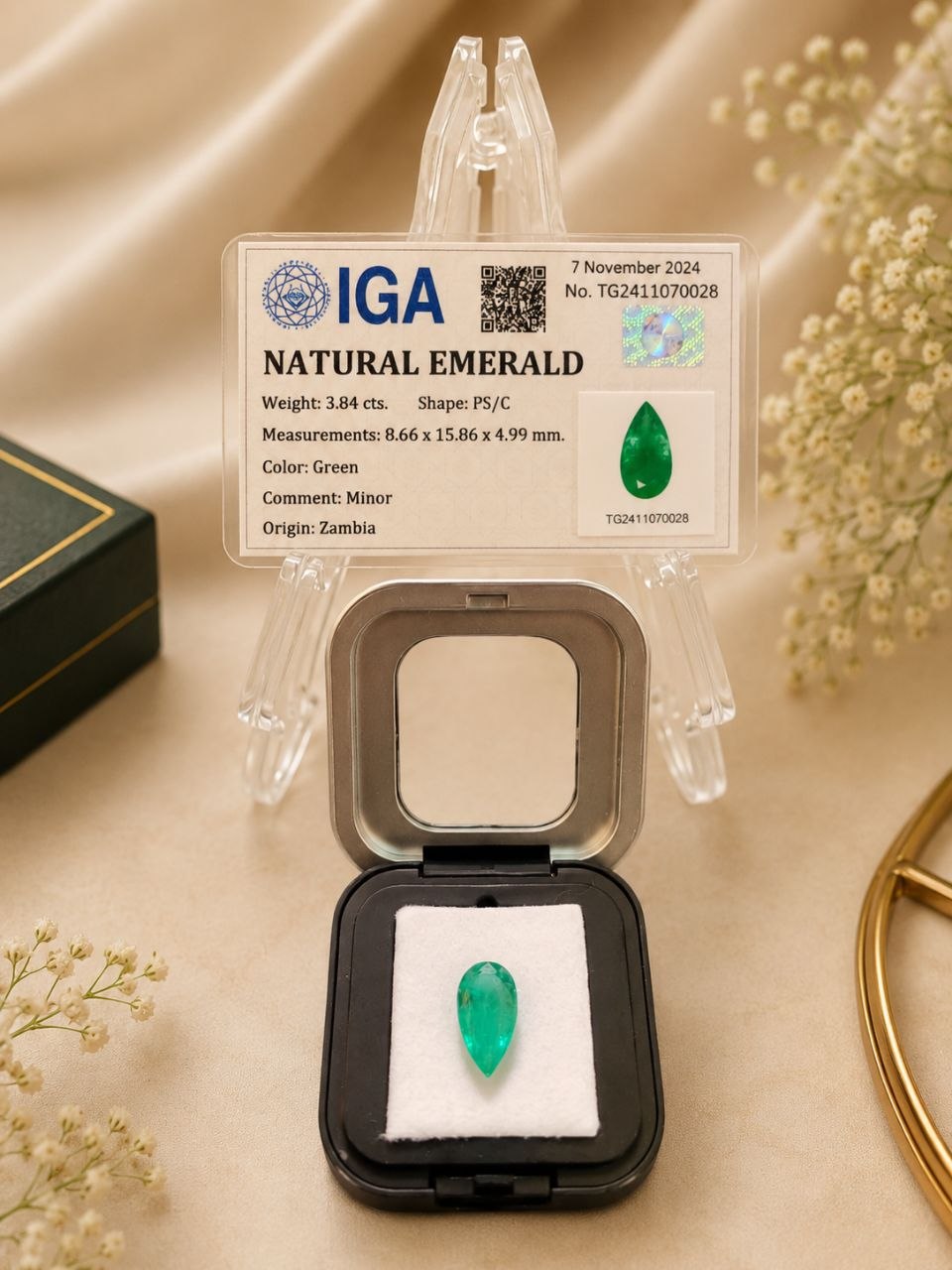
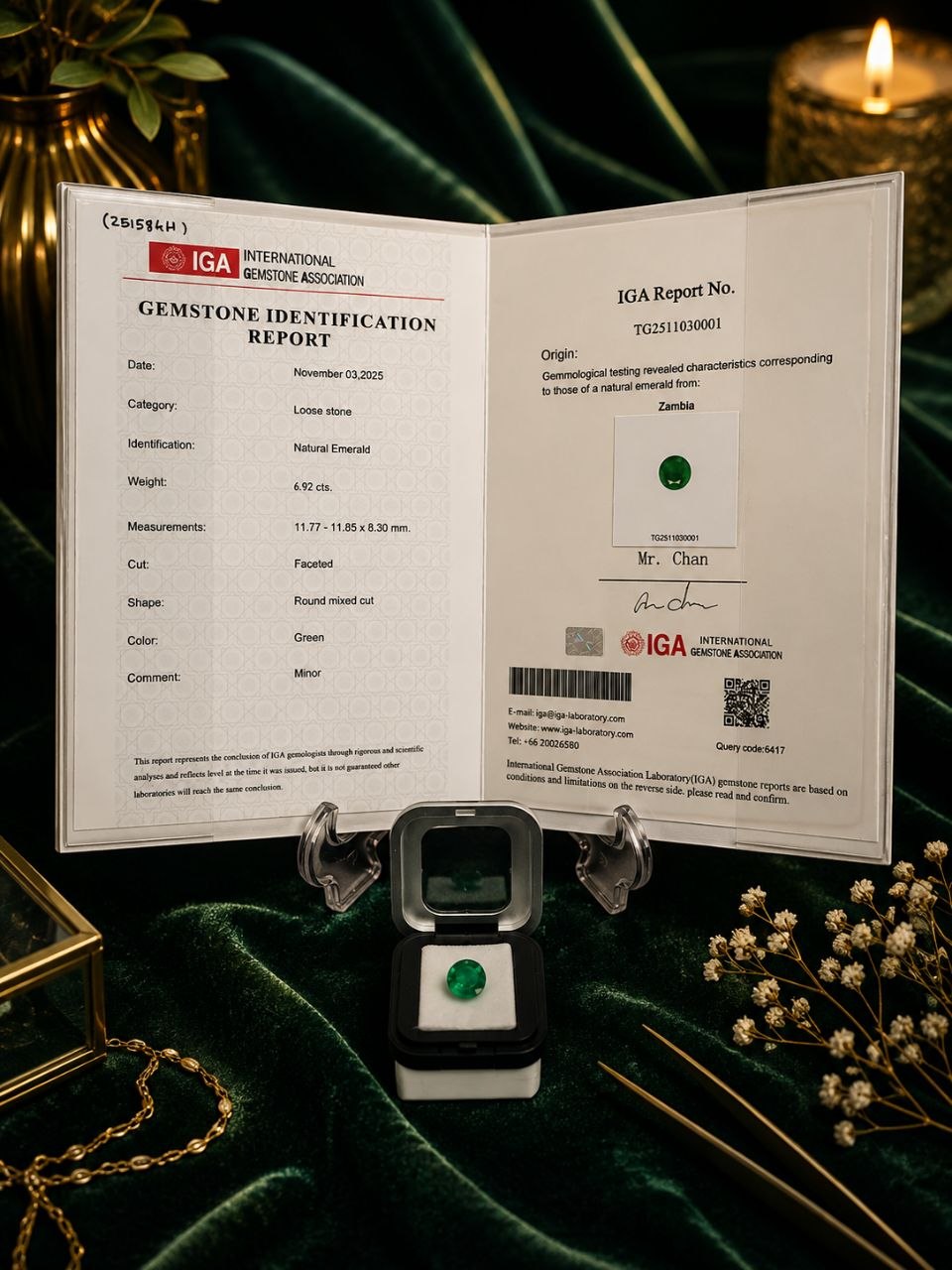
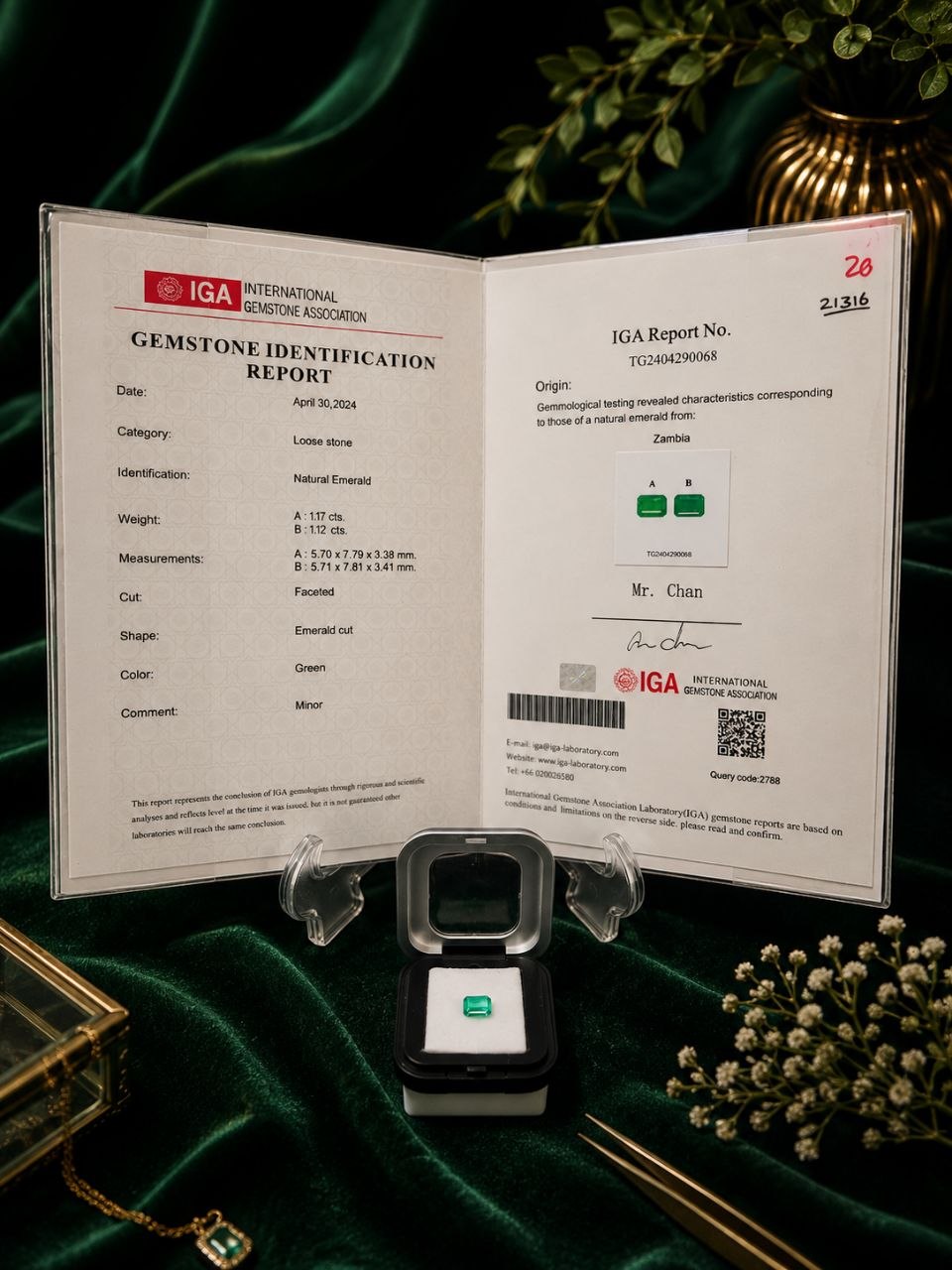
Although Colombian Emeralds have historically been highly valued for their excellent green color, a newer source in the African country of Zambia is producing deep green emeralds with relatively few inclusions.
Many fake and imitation Green Emeralds have been identified over the years. For example, two pieces of lightly colored material may be joined together using a dark green-colored adhesive to create a stone resembling Green Emerald. Faceted green glass can also resemble Emerald. To prevent the low hardness of glass from being easily detected, the glass may be coated with a harder material.
These materials may be sold as genuine Green Emerald by taking advantage of a buyer’s lack of knowledge. Only skilled experts are capable of detecting all such imitations and treatments. Therefore, it is extremely important to purchase Green Emeralds only from reputable and trusted sellers.
Trapiche Emerald
A rare and unusual variety of Emerald is known as Trapiche Emerald. Its characteristic feature is a star-shaped pattern located at the center of the stone, forming a distinctive hexagonal design.
The rays of this star-like pattern closely resemble a natural star. This effect is not caused by the reflection of light from tiny fibrous inclusions. Instead, it is created by black carbon-rich inclusions arranged in a star-like pattern.
Trapiche Emeralds are found primarily in the Boyacá emerald-mining region of Colombia and are often cut as Cabochons.
Durability and Care
Although Green Emerald has a suitable level of hardness, it is a relatively brittle and fragile gemstone. If an Emerald receives a strong impact or is exposed to extreme temperature changes, internal fractures may expand within the stone.
Emeralds that have been treated to conceal their inclusions and fractures should never be cleaned with ultrasonic cleaners and should not be washed with soap or harsh cleaning agents. Such cleaning methods can remove or damage the oil treatment and cause previously concealed internal fractures to become visible again.
Uses
Transparent Green Emeralds are cut for use in the jewelry industry. Emerald is highly sensitive to pressure and impact. To reduce the amount of stress placed on the gemstone during cutting, the well-known Emerald Cut is commonly used.
Translucent Green Emeralds may be cut and polished as Cabochons or beads. The same approach is also used for Trapiche Emeralds.
Green Emerald is also the birthstone for the month of May.
Types of Green Emerald
- Brazilian Emerald: This name refers to Emeralds originating from Brazil. The term may also be used in reference to Brazilian Green Tourmaline.
- Cat’s-Eye Emerald: A type of Emerald displaying the Cat’s-Eye phenomenon. This variety is extremely rare and generally occurs only in light-colored Green Emeralds.
- Colombian Emerald: Emerald originating from Colombia and generally known for its high quality.
- Star Emerald: Another name sometimes used for Trapiche Emerald.
- Trapiche Emerald: Emerald containing black inclusions that create its distinctive star-like pattern.
- Zambian Emerald: Emerald originating from Zambia, generally known for its good transparency and quality.
Misleading and Incorrect Names
The production of synthetic Emeralds began in 1848. Synthetic Emeralds can often be produced with an appearance remarkably similar to natural Emerald. The similarity can be so strong that the two may be difficult to distinguish using ordinary equipment.
Some names used for synthetic Emeralds include:
- Biron Emerald
- Gilson Emerald
- Lennix Emerald
- Chatham Emerald
- Kimberly Emerald
- Linde Emerald
- Regency Emerald
- Zerfass Emerald
Green-colored glass is also one of the materials that can closely resemble Green Emerald. The green color of glass can be made very similar to that of Emerald. However, the physical and optical properties of the two materials can be distinguished relatively easily by a trained gemologist.
Some misleading names used by individuals in the jewelry industry for green glass include:
- Broghton Emerald
- Endura Emerald
- Ferrers Emerald
- Mount St. Helens Emerald
- Medina Emerald
- Spanish Emerald
Other misleading names associated with Green Emerald include:
- African Emerald: Actually a variety of green Fluorite.
- Bohemian Emerald: Actually green Fluorite.
- Cape Emerald: Actually Prehnite.
- Congo Emerald: Actually Dioptase.
- Emeraldine: A type of Chalcedony that has been artificially colored green.
- Emeraldite: A type of green Tourmaline.
- Evening Emerald: Actually Peridot.
- Indian Emerald: Actually Quartz or Chalcedony that has been artificially colored green.
- Lithia Emerald: Actually Hiddenite.
- Mascot Emerald: An imitation Emerald.
- Night Emerald: Actually Peridot.
- Oriental Emerald: Actually a green variety of Corundum.
- South African Emerald: Actually green Fluorite.
- Tecla Emerald: A fake or imitation Emerald.
- Transvaal Emerald: Actually green Fluorite.
- Uralian Emerald: Actually Demantoid Garnet.
Treatments and Enhancements of Green Emerald
Fractures and cracks in Emeralds are often concealed through oiling. This treatment is extremely common in the jewelry industry.
Fracture-filling substances generally have a refractive index similar to that of Emerald, allowing them to reduce the visibility of internal imperfections when the stone is viewed under light.
Oiling is traditionally performed by heating the Emerald in a container filled with oil. The heat allows the oil to penetrate the fractures and fissures within the gemstone.
Although cedar oil has traditionally been used for Emerald treatment, more recently, other effective treatment methods have been introduced into the jewelry industry, including various filling and enhancement techniques.
When purchasing an Emerald, buyers should always ask the seller about any treatments performed on the stone. These treatments can have a significant effect on the value and price of a Green Emerald.
As a general rule, an Emerald should be assumed to have undergone oiling or fracture filling unless it has been clearly established that no such treatment has been performed.
The effect of oil treatment is not necessarily permanent. With continued use, the treatment can gradually deteriorate, and cleaning the gemstone may also reduce or remove the effects of the treatment.
Sources of Green Emerald
Colombia has historically been one of the world’s leading producers of high-quality Green Emeralds. More recently, Zambia has also become an important Emerald-producing country.
Ancient Emerald sources were located in Egypt and Australia. Significant Emerald deposits are also found in Brazil, China, Afghanistan, Russia, Mozambique, South Africa, and the United States (North Carolina).
Gemstones Similar to Green Emerald
The green color of some gemstones that resemble Emerald may generally appear darker. One example is Chrome Diopside, which is significantly softer than Green Emerald.
Tsavorite may also be confused with Green Emerald; however, Tsavorite has different optical properties and can be distinguished from Emerald through gemological examination.
Reviews
There are no reviews yet.